
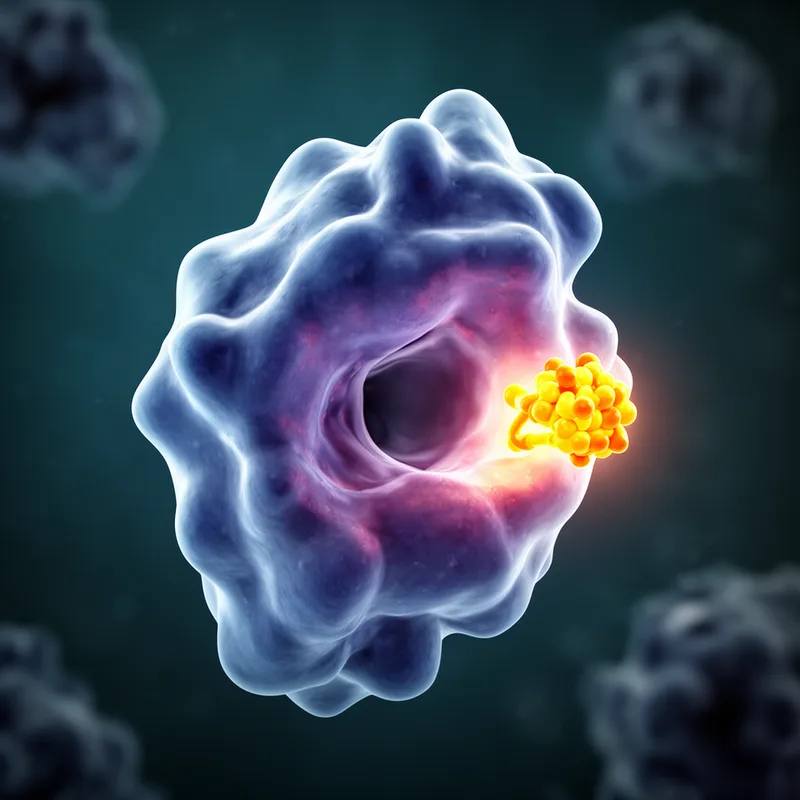
apoenzyme
- noun
- /ˌæpoʊˈɛnzaɪm/
- Specialized
- The apoenzyme becomes active only when it binds to its specific coenzyme.
Examples
-
The apoenzyme is inactive without its cofactor.
-
Many enzymes consist of an apoenzyme and a cofactor.
-
A deficiency in the coenzyme prevents the apoenzyme from catalyzing the reaction.
-
Researchers isolated the apoenzyme to study its structure separately from the cofactor.
-
The apoenzyme needs to bind with a cofactor to initiate the biochemical reaction.
-
In the lab, scientists focused on the apoenzyme to determine how it interacts with its coenzyme.
-
An apoenzyme is only functional when paired with the appropriate cofactor during metabolic processes.
How Complete
- Specialized


 1
9.7

- Specialized
Surface Forms
Morphology
Etymology
Apoenzyme comes from the Greek prefix apo- meaning 'away' and the word enzyme, so it names the enzyme part that is 'away' from its helper. Think of an apoenzyme as the enzyme protein 'alone' and inactive until it binds its coenzyme to become active.