
holoenzyme


 1
9.7
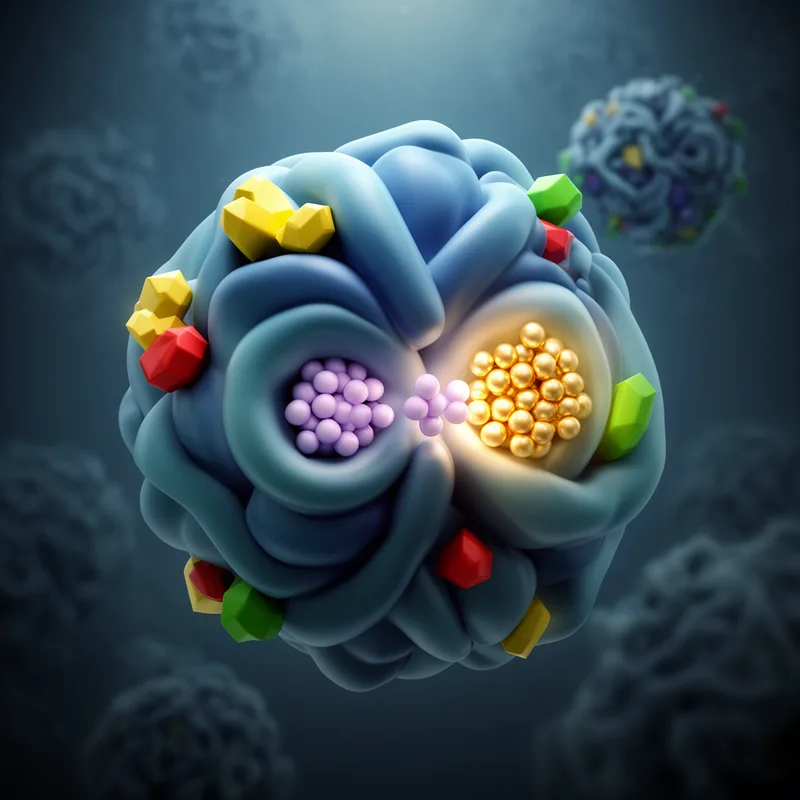
A complete enzyme made of a protein and helper molecules that makes reactions happen
- noun
- /ˈhoʊloʊˌɛnzaɪm/
- Specialized
:
holoenzima
- The rate of DNA synthesis of this holoenzyme, measured with a singly primed ssM13 DNA substrate, is 4.0 ± 0.4 nucleotides.
Examples
-
In this study, the human lagging strand holoenzyme was reconstituted in vitro.
Blog text (27) -
Understanding the structure of the holoenzyme helps scientists design better drugs.
-
Holoenzyme is important for elucidating its mechanistic details and function in vivo.
Blog text (27) -
The holoenzyme plays a crucial role in catalyzing biochemical reactions in the cell.
-
During the experiment, researchers isolated the holoenzyme to study its activity.
How Complete
holoenzyme
1
9.7
- Specialized
1
9.7

apoenzyme
- Specialized
Surface Forms
holoenzyme singular
holoenzymes plural
Morphology
Etymology
The word holoenzyme comes from the Greek prefix holo- meaning 'whole' and the word enzyme, so it means the whole, complete enzyme. That's why a holoenzyme is the protein plus all the small parts or cofactors it needs to work.