
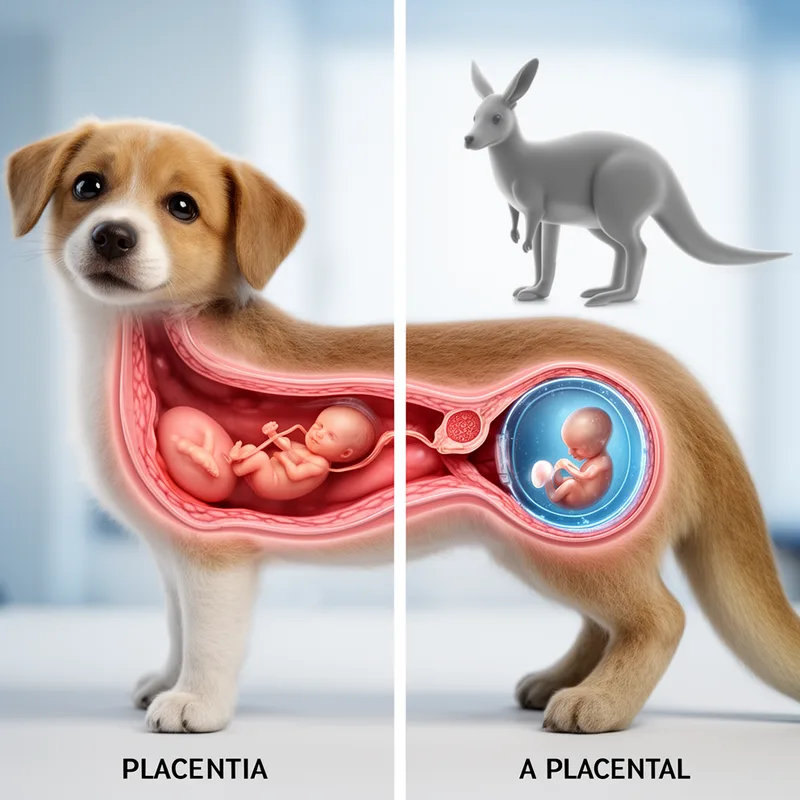
aplacental
9.9
In animals, having no placenta during pregnancy
- adjective
- /ˌeɪpləˈsɛntəl/
- Specialized
:
aplasentario
- Marsupials are considered aplacental because they do not develop a true placenta.
Examples
-
Monotremes such as the platypus are aplacental mammals.
-
The study focused on reproductive differences between placental and aplacental species.
-
The aplacental species of fish reproduce differently.
-
Some reptiles are aplacental and lay eggs.
-
Marsupials are considered aplacental because they do not have a placenta.
-
Monotremes like the platypus are classified as aplacental mammals.
-
Research has shown that aplacental species reproduce in unique ways compared to placental animals.
Antonyms


Surface Forms
aplacental positive
Morphology
Etymology
Aplacental is made of the prefix a- meaning 'not' and placenta, the organ that feeds a baby inside the mother. The word placenta originally meant a 'flat cake' because of its shape, which gives an easy picture. So, aplacental means 'without a placenta'.