
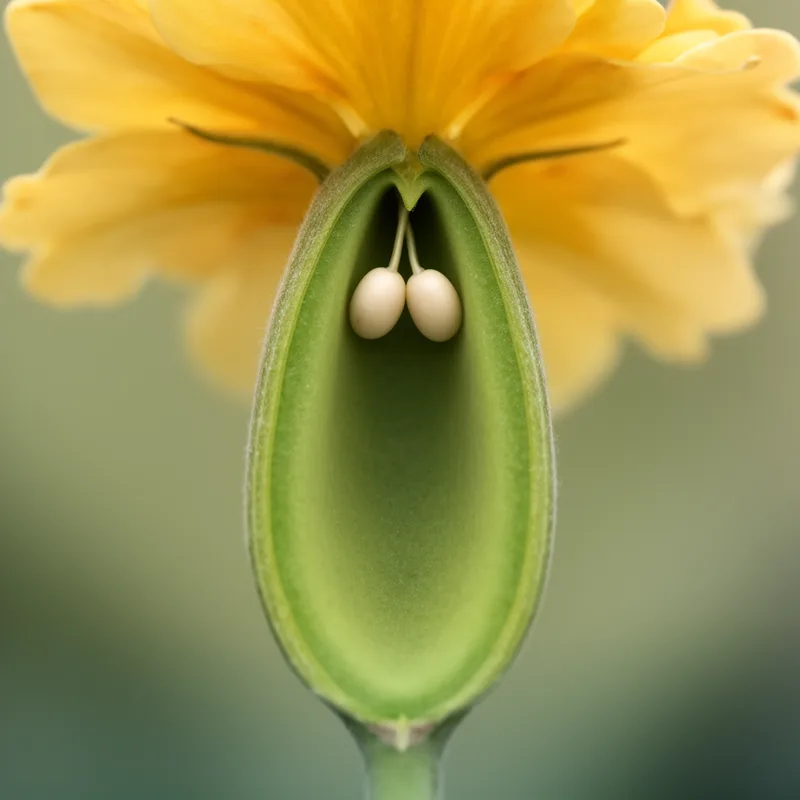
apical placentation
- noun
- /ˈeɪpɪkəl pləˌsɛnˈteɪʃən/
- Specialized
- Botanists distinguish apical placentation from other types based on the ovule position in the ovary.
Examples
-
In primrose flowers, apical placentation can be observed under careful microscopic examination.
-
Understanding apical placentation helps in identifying certain plant families and species.
-
The sunflower exhibits apical placentation in its reproductive structure.
-
Many plants, including orchids, show apical placentation.
-
In primrose flowers, apical placentation can be observed under careful microscopic examination.
-
Understanding apical placentation helps in identifying certain plant families and species.
-
Many plants, including orchids, show apical placentation.
Surface Forms
Morphology
The noun is compositionally built from 'apical' (pertaining to the apex/top) + 'placentation' (the placement pattern of ovules), so its meaning — ovules placed at the top/apex of the ovary — is directly derivable. Although technical botanical vocabulary, the modifier+noun pattern is regular and has cross-linguistic parallels, so a learner who knows both constituents would understand it.
Etymology
Apical placentation comes from a simple picture: apical means 'at the top' and placentation is about where a flower's 'seeds' sit. In this type the seeds sit at the very top of the ovary, the seed part of the flower, so the name helps you remember it means seeds at the 'top'.

