
aphanite
- noun
- /ˈæfəˌnaɪt/
- Specialized
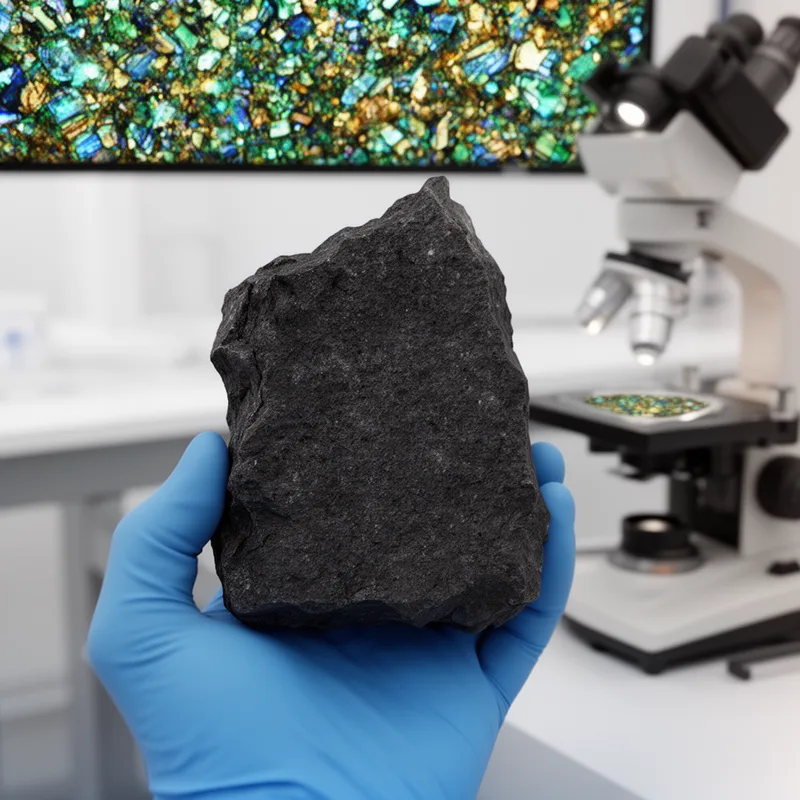
- Under the microscope, aphanite reveals its crystalline structure, which is invisible to the naked eye.
Examples
-
Geologists collected several samples of aphanite for further study in the laboratory.
-
The geologist identified the rock as aphanite.
-
Basalt is a common type of aphanite found in volcanic regions.
-
Many aphanites are found in volcanic regions.
-
Basalt is a common type of aphanite found in volcanic regions.
-
Geologists collected several samples of aphanite for further study in the laboratory.
-
Under the microscope, aphanite reveals its crystalline structure, which is invisible to the naked eye.
Surface Forms
Morphology
aphanite = aphanitic (opaque) = aphan + ite
The combining form 'aphan-' is a technical Greek-derived morpheme unfamiliar to average learners and the mineral-building suffix '-ite' yields a specialized geological noun, so the relation is not transparently inferable.
Etymology
Aphanite comes from Greek parts a- meaning 'not' and phanēs meaning 'seen', with the ending -ite meaning 'stone'. So aphanite literally means a 'stone that is not seen', which fits rocks whose crystals are too small to see with the naked eye.

