
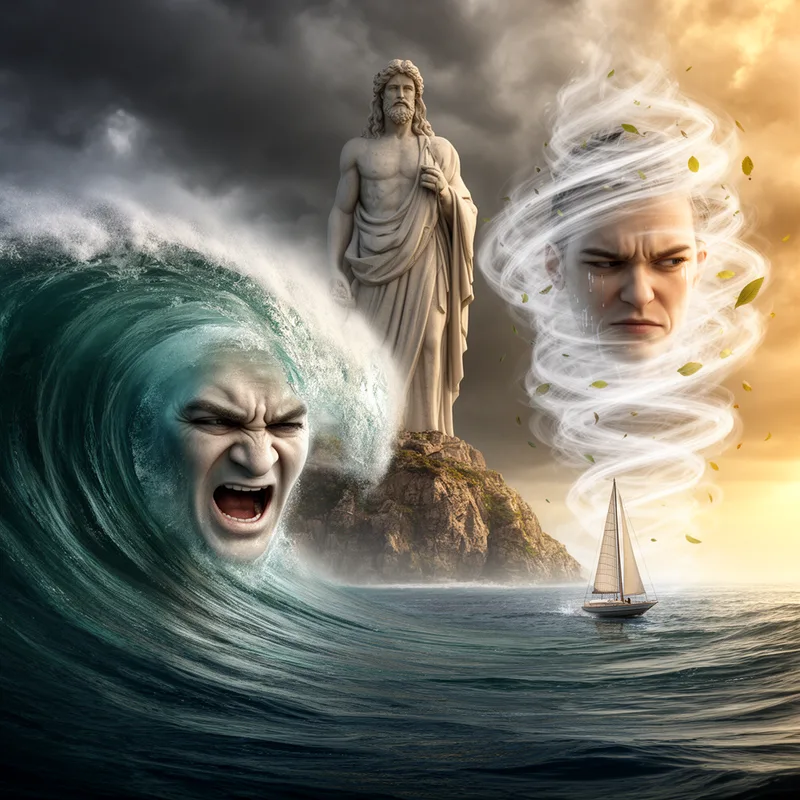
anthropopathism
- noun
- /ˌænθrəˈpɑːpəˌθɪzəm/
- Specialized
- Some critics argue that describing the wind as 'jealous' is a form of anthropopathism.
Examples
-
The poet's reference to the angry sea is an example of anthropopathism.
-
In ancient myths, anthropopathism was used to explain the actions of gods and nature.
-
Many ancient cultures practiced anthropopathism.
-
The concept of anthropopathism helps us understand emotions.
-
In ancient myths, the gods displayed emotions through anthropopathism, influencing nature's actions.
-
Describing the wind as 'jealous' is a clear example of anthropopathism in literature.
-
When a poet refers to the angry sea, they are employing anthropopathism by attributing human emotions to nature.
Synonyms

 1
9.9
1
9.9

Giving animals, objects or gods human feelings and actions, like talking animals in stories


 1
9.9
1
9.9
The act of giving human qualities to animals or objects
To give a god or thing a human body and human feelings
How Human

Surface Forms
Morphology
anthropopathism = anthropo + path + ism
Formed from Greek combining elements ('anthropo-' for human and a root related to feeling) plus '-ism'; these combining forms are not standalone, productive English words, so an average B1 learner cannot reliably derive the meaning from the parts.
Etymology
Anthropopathism comes from Greek parts anthropo- meaning 'human' and pathos meaning 'feeling', the same root in sympathy which means 'feeling with'. So anthropopathism is the idea of giving human feelings to animals, objects, or gods, for example calling the sea 'angry' to explain its behavior.