

anthocyanin
 1
8.7
1
8.7

- noun
- /ˌænθoʊˈsaɪənɪn/
- Specialized
- Research shows that consuming foods high in anthocyanin, like blueberries, can have various health benefits.
- anthocyanin pigments
- anthocyanin production
Loading YouTube…
Watch on YouTubeBut doing fruits that are that dark blue and purple and black colour tend to have a good amount of anthocyanins.
- But doing fruits that are that dark blue and purple and black colour tend to have a good amount of anthocyanins.
- Blackberries, dark currents, any of these thin skinned berries that are purplish in color is that they contain what are called anthocyanins.
- And these anthocyanins turn out to be pH indicators.
- So they have polyphenols in them and they have anthocyanins.
Examples
-
The vibrant color of the grapes is due to the presence of anthocyanin, a natural pigment responsible for their deep purple hue.
-
Known for infusing many of our other favorite fruits with their distinctive colors, anthocyanins belong to a broader group of compounds known as "phenolics."
Academic text (2006) -
After the genes are shot into plant tissue, cells with the anthocyanin gene turn red.
Academic text (1999) -
And these anthocyanins turn out to be pH indicators.
-
Although the plant can adapt to many environments, its growing season and anthocyanin production vary with the temperature and sunlight of its immediate surroundings.
Academic text (2006) -
When consumed, these anthocyanin pigments function as antioxidants.
Academic text (2006) -
The same natural compound that makes blueberries blue and plums purple: anthocyanins.
Academic text (2006) -
In Lee's laboratory, anthocyanin analyses are essential to her search for new ways to forestall unwanted loss of these compounds.
Academic text (2006) -
Griesbach and Stommel are now exploring the biochemistry of the anthocyanin pigments responsible for the Black Pearl pepper's deep-black color.
Academic text (2006) -
"Some anthocyanins are healthful antioxidants that can—as their name suggests—combat harmful oxidation in the body.
Academic text (2006)
Synonyms
 10
4.2
10
4.2
A natural substance inside plants and animals that gives color to skin and leaves
 2
7.3
2
7.3
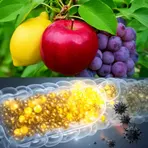
A natural substance in plants that gives color and protects cells from damage

A natural red to purple substance in fruits and vegetables that gives them color
Surface Forms
Morphology
anthocyanin = anthocyan (opaque) = anthocyan + in
The term 'anthocyanin' is a specialized scientific term, and its components are not transparent to the average English learner.
Etymology
Anthocyanin comes from the Greek parts anthos 'flower' and kyanos 'dark blue', the same root as the color cyan. That's why anthocyanin is a natural plant color that gives flowers, fruits, and leaves their red, blue, or purple shades.