
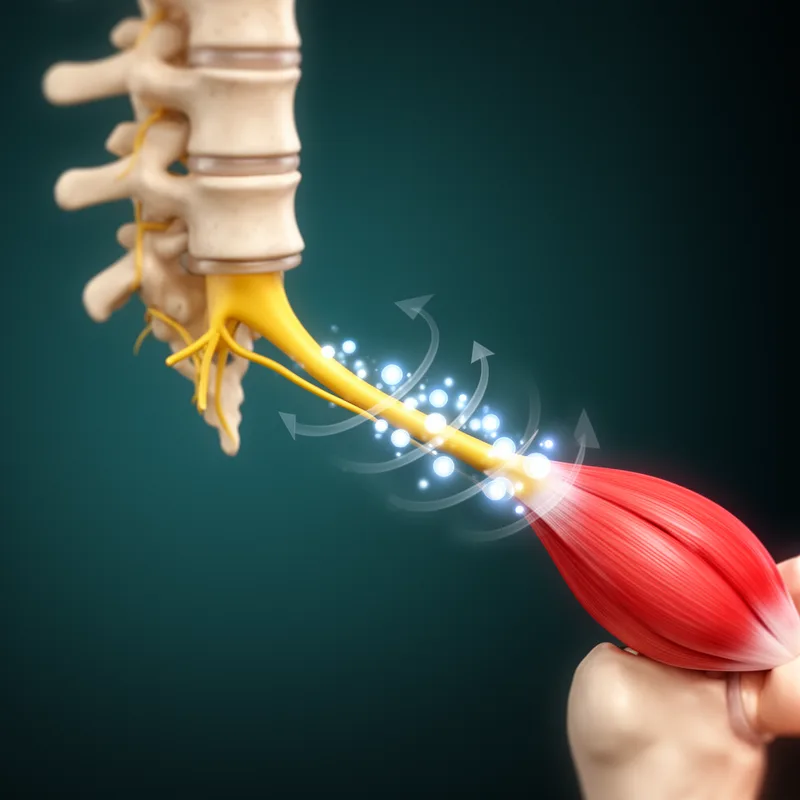
anterior root
- noun
- /ænˈtɪr.i.ər ruːt/
- Specialized
- The function of the anterior root is to transmit motor signals from the spinal cord to the muscles.
Examples
-
Damage to the anterior root can result in the loss of voluntary muscle movement.
-
Each spinal nerve has an anterior root.
-
During surgery, the surgeon identified the anterior root to avoid nerve injury.
-
The anterior root carries motor signals.
-
The surgeon carefully preserved the anterior root during the operation to ensure the patient's motor functions remained intact.
-
Damage to the anterior root can lead to difficulties in moving the affected limbs.
-
The anterior root plays a crucial role in connecting the spinal cord to the muscles, allowing for voluntary movement.
Synonyms
The front branch of a spinal nerve that sends movement signals to muscles
Antonyms
- Specialized
A group of nerves at the back of the spine that carries feeling from the body to the spinal cord
Surface Forms
Morphology
anterior + root
The compound is compositionally built from 'anterior' (toward the front) + 'root' (a projecting/base part), so its basic meaning — the front-facing/root part of a structure — is directly inferable. Although the full anatomical detail (motor fibers, spinal nerve context) is technical, a B1 learner who knows both constituents can reasonably understand it as the ‘front root’ of the spinal cord.
Etymology
Anterior root uses the words anterior and root; anterior means 'front' and root is like a plant root growing from the spinal cord. That's why an anterior root is the nerve root that carries the messages that tell muscles to move away from the spinal cord.

