
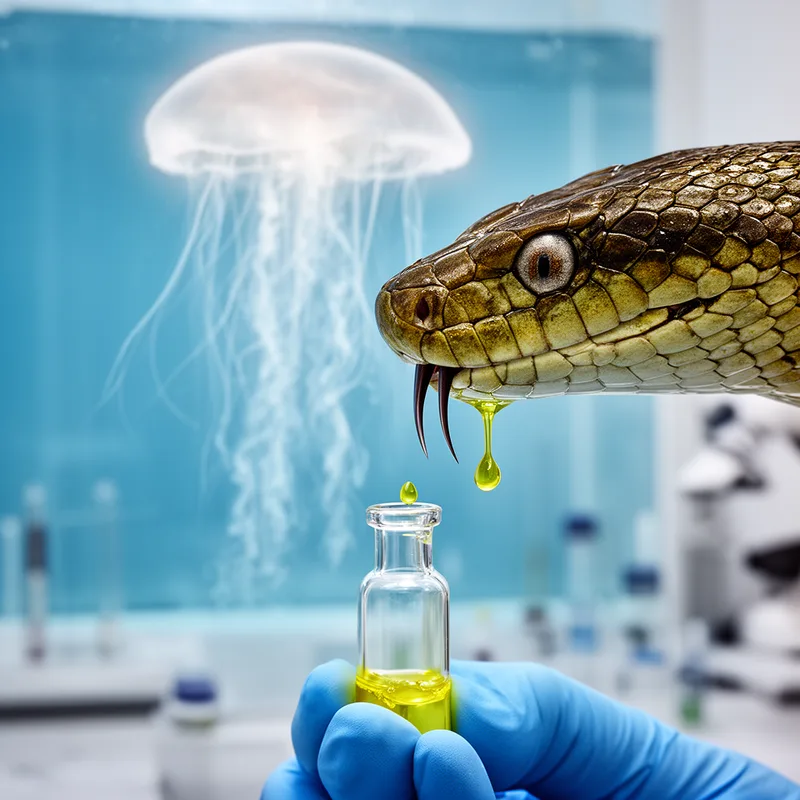
animal toxin
- noun
- /ˈænɪməl ˈtɑksɪn/
- Specialized
- Some animal toxins can be harmful to humans, leading to a need for antivenom in case of bites.
Examples
-
Scientists studied the effects of the animal toxin found in jellyfish venom.
-
Some animal toxins are being investigated for their potential use in medicine.
-
The snake's animal toxin can cause paralysis in its prey.
-
The animal toxin caused severe reactions in humans.
-
Some animal toxins can be lethal if ingested.
-
Researchers are studying various animal toxins to develop new medicines that can target diseases more effectively.
-
The venom of certain snakes contains animal toxins that can cause paralysis in their prey.
Synonyms
 140
5.3
140
5.3

A poisonous substance that some animals, plants, or bacteria make
 50
4.6
50
4.6
A poison some animals inject when they bite or sting
 3
7.9
3
7.9
A poisonous substance made by a living thing like a plant, animal, or germ
 1
4.4
1
4.4
Something that can cause serious harm or death when swallowed, touched and breathed


 1
9.5
1
9.5
A poisonous substance that can harm people and animals

Poison that animals produce, often from snakes or jellyfish
How Toxic

Surface Forms
Morphology
The meaning 'a poisonous substance produced by an animal' is directly and transparently derived from combining 'animal' (an organism) and 'toxin' (a toxic substance). This compound follows standard compositional noun + noun patterns found in many languages, so a B1 learner who knows both constituents will readily infer the MWE meaning.
Etymology
Animal toxin simply joins animal and toxin to name a poison made by a creature. People began using 'toxin' for harmful substances made by living things, so animal toxin now means a 'poison' produced by an animal.