
angiotensin II
- noun
- /ˌæn.dʒi.oʊˈtɛn.sɪn tuː/
- Specialized
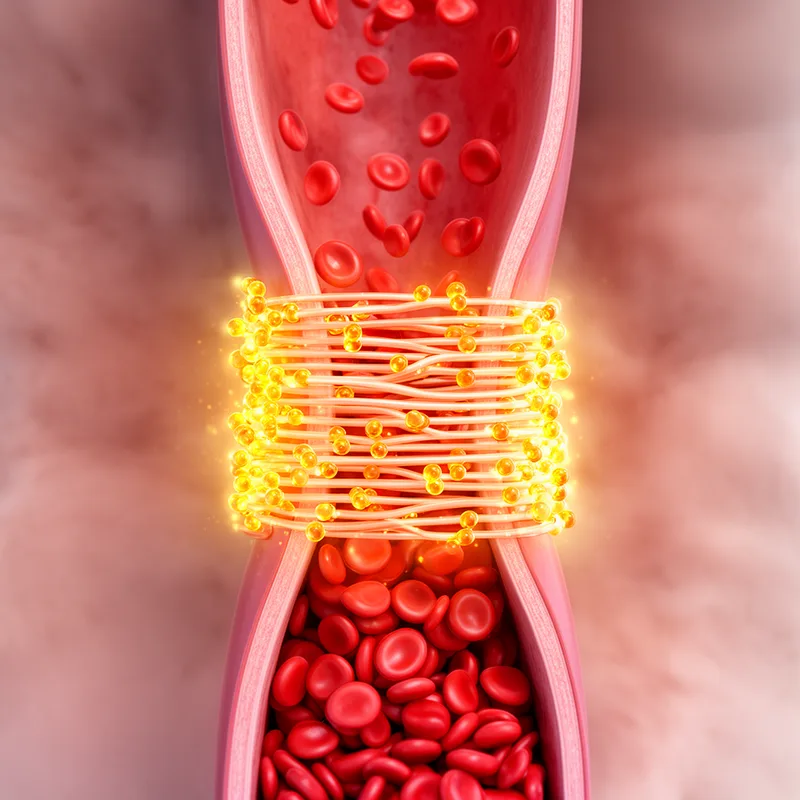
- Angiotensin II is a potent vasoconstrictor that significantly increases blood pressure.
- angiotensin II and vasopressin
- angiotensin II and noradrenaline
- action of angiotensin II
Examples
-
Research indicates that angiotensin II contributes to hypertension by constricting blood vessels.
-
The doctor explained that angiotensin II acts on blood vessels to elevate blood pressure during stress.
-
Taken together, these findings show that angiotensin II plays a part in several immune processes.
Academic text (2018) -
The high levels of angiotensin II also activate the sympathetic nervous system.
Academic text (2011) -
Furthermore, because of its vascular actions, angiotensin II itself can contribute to the development of Alzheimer's disease.
Academic text (2016) -
However, studies in rodents and computer simulations indicate that angiotensin II production is physiologically regulated by renin 4, 14.
Academic text (2018) -
Aldosterone production occurs in the adrenal gland and is stimulated by the increased circulating levels of angiotensin II.
Academic text (2011) -
Many immune effects of ACE are independent of angiotensin II, but the peptide substrate(s) and/or product(s) that mediate these effects are currently unknown.
Academic text (2018)
Synonyms


 1
8.9
1
8.9
A hormone that makes blood vessels narrow and raises blood pressure
A chemical that makes blood vessels narrower and raises blood pressure
Surface Forms
Morphology
The meaning is directly derivable from the constituents: 'angiotensin' (a blood-vessel-constricting hormone) combined with the Roman numeral 'II' signals the second form or isoform of that hormone. This numeric labeling of sequential molecular forms is a regular, cross-linguistic naming convention, so a learner who knows both constituents can infer the MWE's meaning.
Etymology
Angiotensin II gets its name from parts that show its job: angio means 'vessel', tensin means 'to tighten', and II means 'second'. So the name gives a picture of a second form that makes blood vessels 'tighten' and so 'raise blood pressure'.