
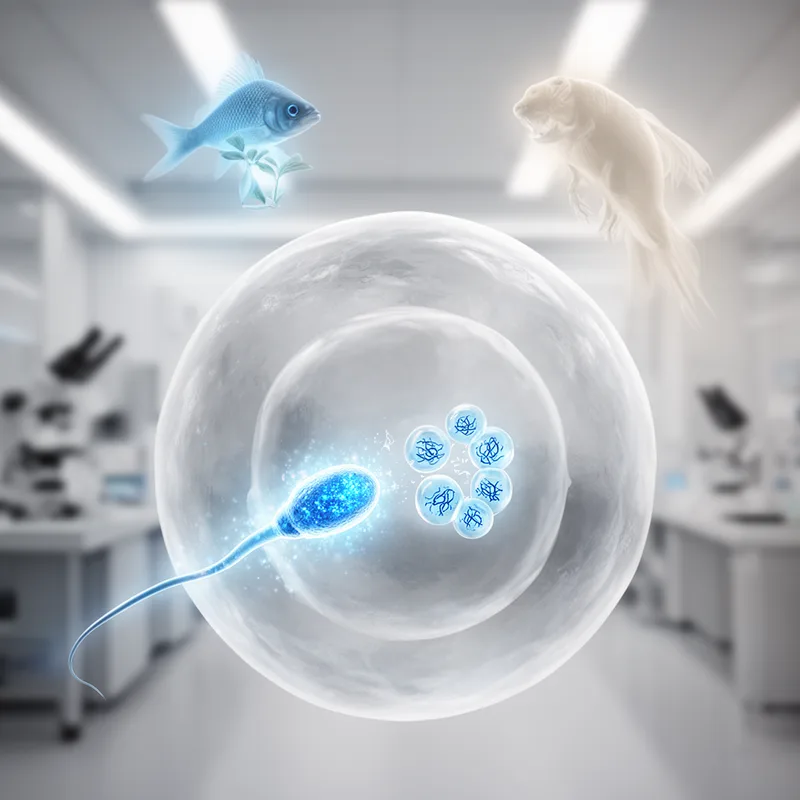
androgeny
- noun
- /ˈændrəˌdʒɛnɪ/
- Specialized
- Some rare plants can reproduce through androgeny, resulting in offspring with only paternal genes.
Examples
-
Researchers observed androgeny occurring in the laboratory during controlled fertilization experiments.
-
Cases of androgeny provide insight into genetic inheritance patterns in certain species.
-
The concept of androgeny is fascinating in reproductive biology.
-
Many researchers study androgeny for its implications in genetics.
-
Cases of androgeny provide insight into genetic inheritance patterns in certain species.
-
Researchers observed androgeny during laboratory experiments focused on embryonic development.
-
Some rare plants can reproduce through androgeny, leading to the creation of offspring that possess exclusively paternal DNA.
Synonyms

A form of reproduction where a young plant or animal develops using only the father's genes
Surface Forms
Morphology
Etymology
Androgeny comes from Greek parts andr- meaning 'male' and -geny meaning 'birth' or 'origin'. So androgeny literally means 'birth from the male', which fits the scientific use for cases where an embryo or offspring develops with only the father's genes. You can also see andr- in words like androgen (a male hormone) or android (a human-like robot), which helps remember the 'male' part.

