
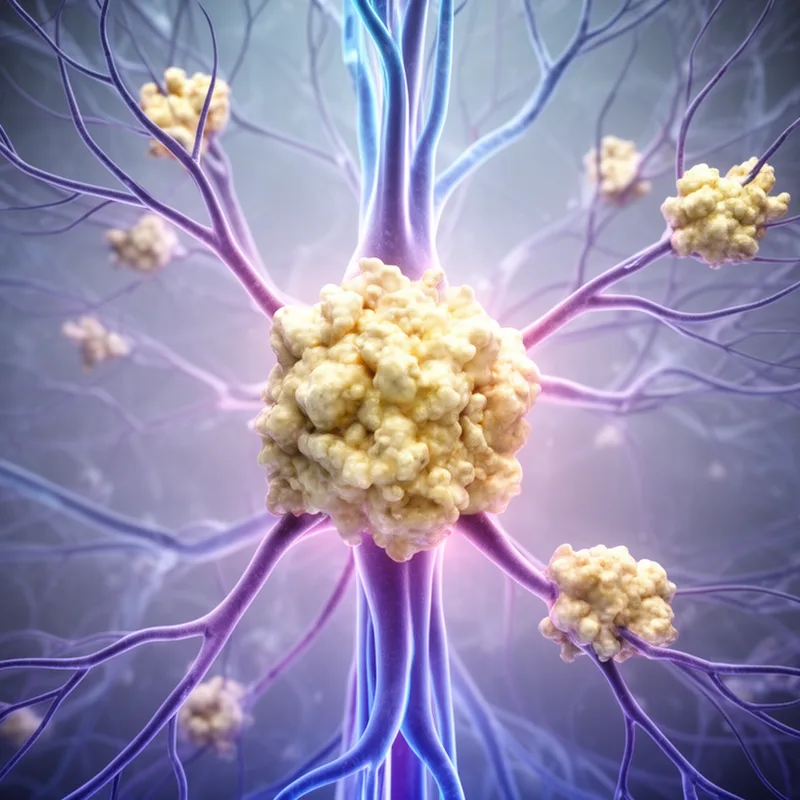
amyloid protein plaque
- noun
- /ˈæməˌlɔɪd ˈproʊtiːn plæk/
- Specialized
- Researchers are studying how amyloid protein plaques develop and disrupt normal neural function.
Examples
-
An amyloid protein plaque was found.
-
Early detection of amyloid protein plaque could help in the diagnosis of neurodegenerative conditions.
-
The accumulation of amyloid protein plaque in the brain is a hallmark of Alzheimer's disease.
-
The amyloid protein plaque is harmful.
-
Researchers discovered that the accumulation of amyloid protein plaques in the brain is a key indicator of Alzheimer's disease.
-
People diagnosed with Alzheimer's often exhibit a significant buildup of amyloid protein plaques in their neuro tissue.
-
The presence of amyloid protein plaques in the brain can lead to cognitive decline in patients with neurodegenerative disorders.
Synonyms

 1
6.9
1
6.9

A clump of protein that builds up in the brain and is seen in Alzheimer's disease
Surface Forms
Morphology
The meaning is strictly compositional: 'amyloid' (a type of protein) + 'protein' (organic molecule) + 'plaque' (an abnormal deposit) together denote a deposit made of amyloid protein. Although this is a medical term, the noun-noun composition is predictable and a learner who knows the constituent meanings can infer the MWE.
Etymology
Amyloid protein plaque is named for sticky protein clumps called amyloid that form a thin plaque or patch on the brain, a bit like the sticky film on teeth. These sticky patches build up and get in the way of brain cells, which is why they are linked to 'Alzheimer's disease'.