
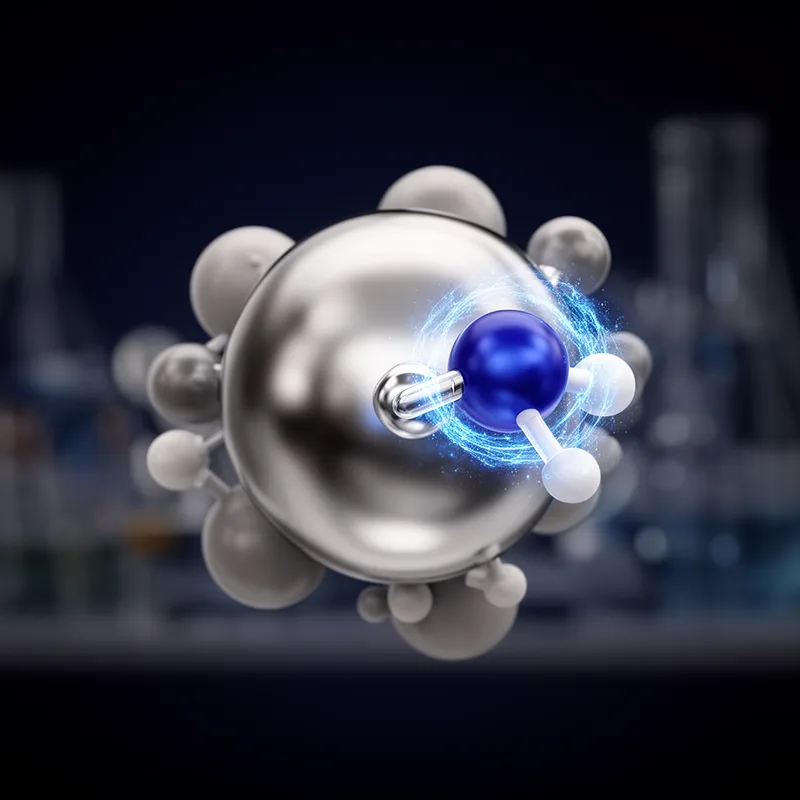
amido


 1
9.9
A negatively charged amide ion that can bind to a metal
- noun
- /əˈmɪdoʊ/
- Specialized
:
ión amido
- The amido ligand in the compound enhances its stability and reactivity during chemical reactions.
Examples
-
Researchers are studying how amido groups can improve the properties of metal complexes in catalysis.
-
Corrosion-resistant coatings included polyamines, amido-amines, and cycloaliphatic epoxies, as well as fiber-reinforced polymers.
Academic text (2003) -
Scientists discovered that the amido ion can effectively bind to various transition metals in coordination complexes.
Synonyms
9.9
A negatively charged ion made when an amide loses a hydrogen ion
is a broader term for the negatively charged amide group that acts as a ligand
Surface Forms
Morphology
Etymology
The word amido comes from amide and ammonia meaning 'a strong-smelling gas'. As a noun, an amido is the negatively charged form of an amide or the amide group that can bind to a metal, and the name shows it comes from ammonia and often carries a negative charge or fits to metals.