
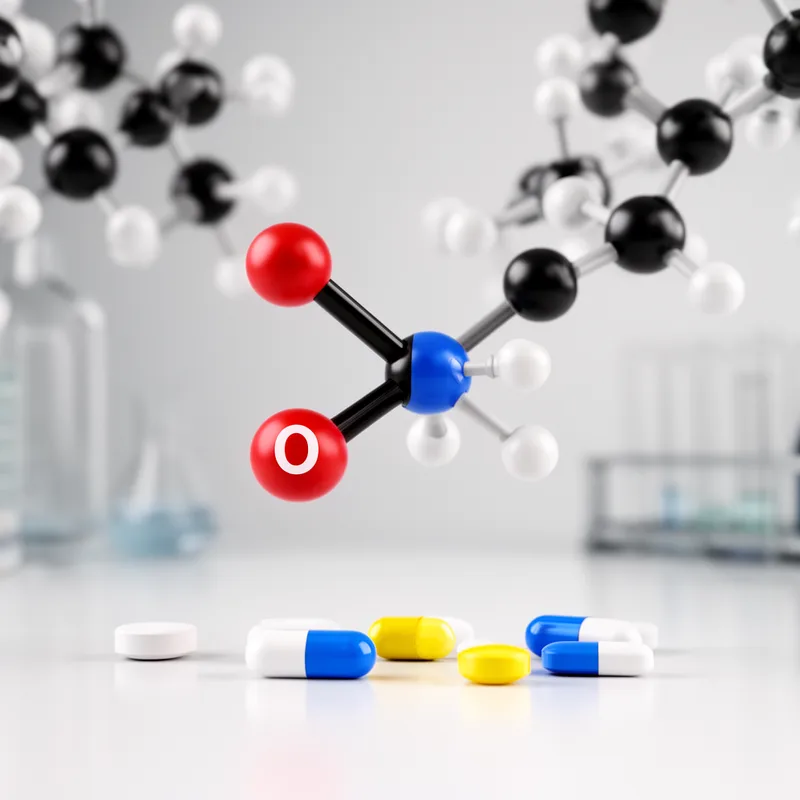
amide


 1
8.7
1
8.7
- noun
- /ˈæmaɪd/
- Specialized
- A common example of an amide is acetamide, which is used in various chemical reactions.
- amide bond
- amide linkage
- amines and amides
Examples
-
In chemistry, amide compounds are important because they link amino acids together in proteins.
-
Hydrogen bonds will form between amides and carbonyls at about every fourth amino acid residue.
Fiction book (2000) -
What about another situation where you have a bond, for example the amide bond, the proteases break.
-
We see a number of peptide bonds, amide bonds, a good indicator of NRPS at play.
-
Benzonatate is closely related to the amide anesthetics such as tetracaine, and it rapidly induces profound anesthesia in the oropharynx.
Academic text (2004) -
Carboxylesterase 1 is a serine esterase, responsible for the hydrolysis of ester- and amide-bond-containing substrates, including xenobiotics and drugs.
Academic text (2018) -
Tae proteins cleave the amide linkages of peptidoglycan and were domesticated in at least three eukaryotic supergroups (Fig. 3; Table 1).
Academic text (2018) -
An amide is formed when the hydroxyl group of a carboxylic acid is replaced with an amino group.
Compounds
- Specialized
A long chemical like nylon made of many repeating parts joined by amide links
Surface Forms
Morphology
amide = amid + ide
A specialised chemical formation (combining form 'amid-' + chemical suffix '-ide') that cannot be transparently derived by an average B1 learner from common English vocabulary.
Etymology
Amide comes from ammonia and the chemical ending -ide, so it means 'related to ammonia'. An amide has a nitrogen part like the one in ammonia, which explains the name.