
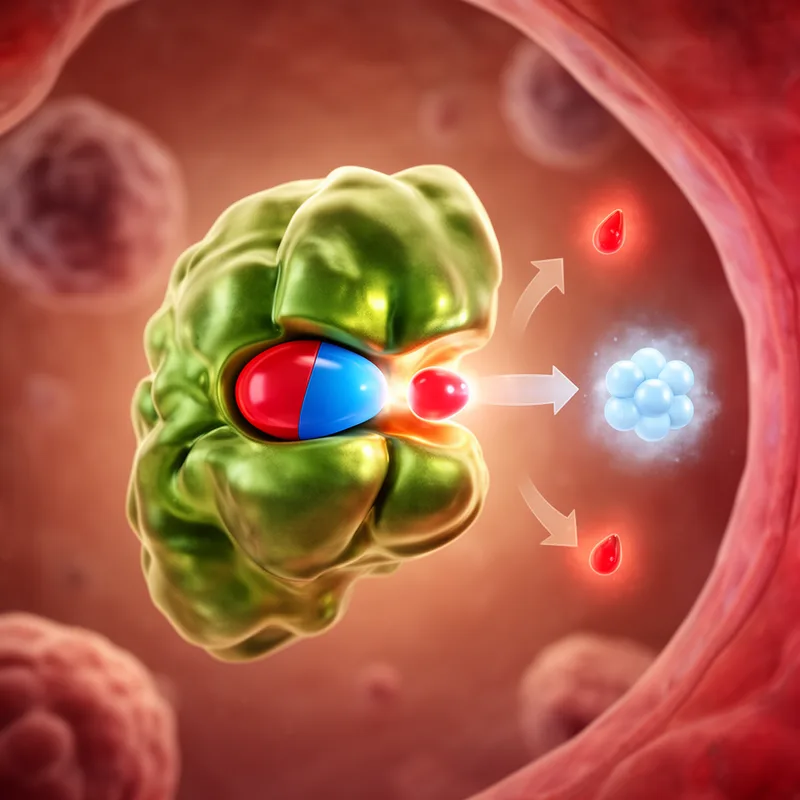
amidase
9.2
A substance in living things that breaks amides into acid and ammonia
- noun
- /ˈæmɪdeɪz/
- Specialized
:
amidasa
- The scientist studied the amidase enzyme that breaks down amides into acids.
Examples
-
Some PGRPs possess amidase activity that can cleave peptidoglycan at positions distinct from Tae proteins.
Academic text (2018) -
A similarly unclear situation exists for animals with obligate endosymbionts that have horizontally acquired amidases 25, 28, 51.
Academic text (2018) -
Researchers found that amidase can enhance the digestion of certain proteins.
-
The lab focused on amidase's role in converting amides into useful metabolites.
Surface Forms
Morphology
Etymology
Amidase comes from the chemical name amide (a kind of molecule related to 'ammonia' and 'acid') and the enzyme ending -ase, the same ending you see in lipase and amylase. So, amidase is an enzyme that 'breaks down' amides into acids and 'ammonia', which explains its modern meaning.

