
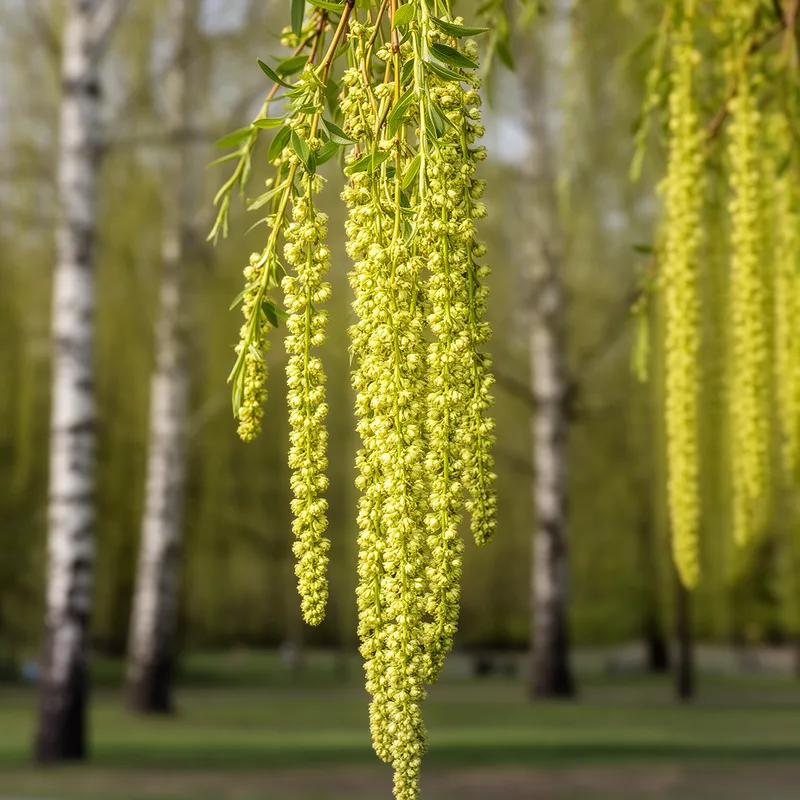
amentaceous
- adjective
- /əˌmɛnˈteɪʃəs/
- Specialized
- Many willow trees are amentaceous, producing long, dangling catkins in the spring.
Examples
-
Poplars, birches, and oaks are all commonly known to exhibit amentaceous characteristics.
-
The amentaceous flowers of the birch tree are quite distinctive.
-
The botanist identified the shrub as amentaceous due to its distinctive flowering structures.
-
Many amentaceous plants thrive in temperate climates.
-
Many willow trees are amentaceous, producing long, dangling catkins in the spring.
-
The botanist identified the shrub as amentaceous due to its distinctive flowering structures.
-
Many amentaceous plants thrive in temperate climates.
Synonyms
Plants that have long thin hanging flowers called catkins, like birch and willow
Surface Forms
Morphology
Etymology
Amentaceous comes from the root ament, which means a 'catkin' — a long, hanging flower cluster. A helpful way to remember it is to think of willows and poplars with their hanging catkins, so amentaceous describes plants that have these hanging flowers.

