
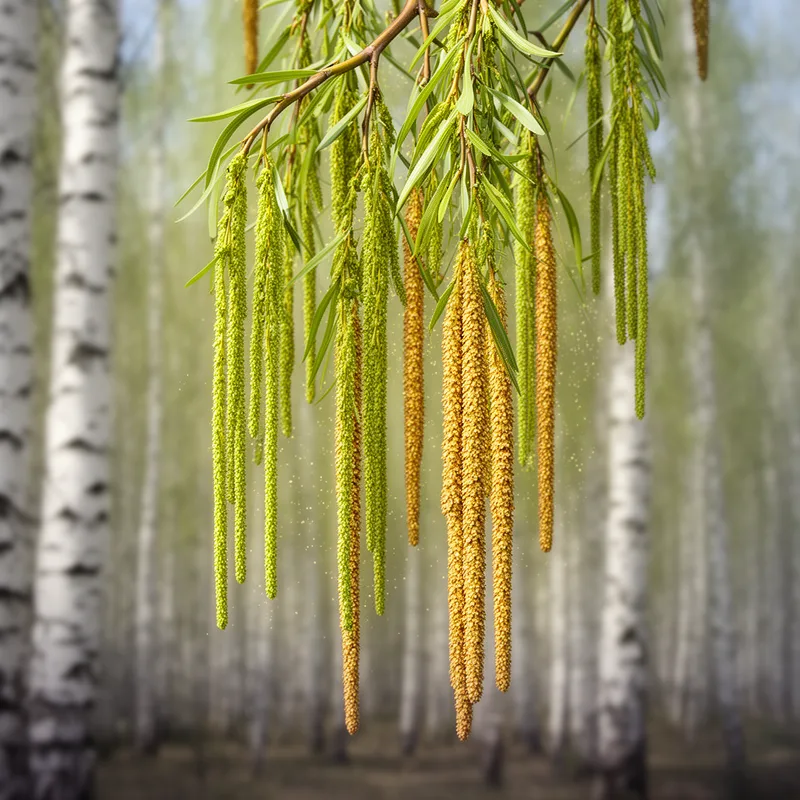
amentiferous
- adjective
- /əˈmɛntɪfərəs/
- Specialized
- The willow tree is an amentiferous species, producing long, drooping catkins every spring.
Examples
-
Many amentiferous plants are wind-pollinated due to the structure of their catkins.
-
Botanists identify certain forests by the abundance of amentiferous trees such as birch and alder.
-
The amentiferous trees in the park attract many visitors.
-
Are all birch trees amentiferous?
-
Many amentiferous species, like willow and birch, produce catkins that hang from their branches.
-
The amentiferous trees in the park attract many visitors with their striking catkins.
-
During our hike, we observed several amentiferous plants with their distinctive catkins swaying in the wind.
Synonyms
Having long, hanging clusters of small flowers like the catkins on willow trees
Surface Forms
Morphology
Etymology
Amentiferous comes from Latin parts: amentum meaning 'catkin', a slim hanging group of flowers, and -ferous meaning 'bearing', as in coniferous, 'cone-bearing'. So, amentiferous describes plants that bear catkins, like willow and birch.

