

alternating current
 6
3.4
6
3.4

- noun
- /ˈɔltərˌneɪtɪŋ ˈkɜrənt/
- Specialized
- Tesla's alternating current can be sent over long distances and at higher voltages, and then can be stepped down by Transformers to enter the local home.
- AC (alternating current)
Loading YouTube…
Watch on YouTubeAnd there's a voltage source, so like a battery that or maybe let's make it, let's make this alternating current.
- And there's a voltage source, so like a battery that or maybe let's make it, let's make this alternating current.
- We have AC alternating current in this problem instead of exponent, pure exponent instead of real exponentials.
Examples
-
Most power lines transmit electricity using alternating current, which can easily be transformed to different voltages.
-
In 1888, George Westinghouse was investigating a motor for his alternating current electrical system.
Academic text (2006) -
If you have alternating current, there will be heat.
Blog text (17) -
And he invented what is called the alternating current, which is what we use in all of our buildings today.
-
Alternating current is far more efficient.
-
Alternating current machines are generally easier to construct but more difficult to understand.
Academic text (2000) -
First it has to be converted by an inverter to alternating current.
Blog text (28) -
Comparing one reactor design to another is similar to comparing a direct current motor with an alternating current motor.
Academic text (2007) -
Also, the alternating current of electricity in the transformer wire windings creates a changing magnetic field.
Blog text (5) -
Industrialist Westinghouse was promoting Tesla's alternating current, AC, while Thomas Edison tried to sell direct current, DC.
Synonyms
 63
3.4
63
3.4
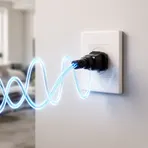
An electric current that changes direction regularly, used to power homes
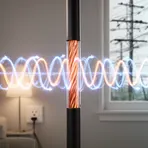
A flow of electricity that moves back and forth regularly, like the power in homes
Antonyms

- Specialized
3
3.5
An electric flow that moves steadily in one direction, for example from a battery
How Often


Surface Forms
Morphology
The meaning is directly compositional: 'alternating' (reversing direction periodically) modifies 'current' (flow of electric charge), so the phrase denotes a current that changes direction repeatedly. Although it's a technical term, the semantics follow standard English composition and similar labels exist cross-linguistically, making it understandable to a learner who knows the constituent words.
Etymology
Alternating current comes from the simple image of an electric flow that goes back and forth. The word alternating means 'changing direction' and current means 'flow', so the name describes electricity that 'changes direction' again and again rather than moving only one way.