
allotropic
- adjective
- /ˌæl.əˈtrɒp.ɪk/
- Specialized
- Iron exhibits allotropic behavior, transforming between alpha and gamma forms depending on temperature.
- allotropic modifications
- allotropic modifications of carbon
Examples
-
The allotropic forms of oxygen include ozone and diatomic oxygen, which have different chemical behaviors.
-
Various allotropic modifications of carbon on the surface of a cathode exhibit phenomenal emission.
Academic text (2018) -
Constructing a language of the unconscious, Lawrence reaches into this depth by means of allotropic or expressionist styles.
Academic text (2003) -
High field emissions are observed for all allotropic modifications of carbon, which makes them promising for obtaining high-current electron beam sources.
Academic text (2018) -
A film made of allotropic modifications of carbon (disregarding porosity) has a permittivity of about 16, which substantially reduces the strength of the image upon the transition of electrons from the metal to this film.
Academic text (2018) -
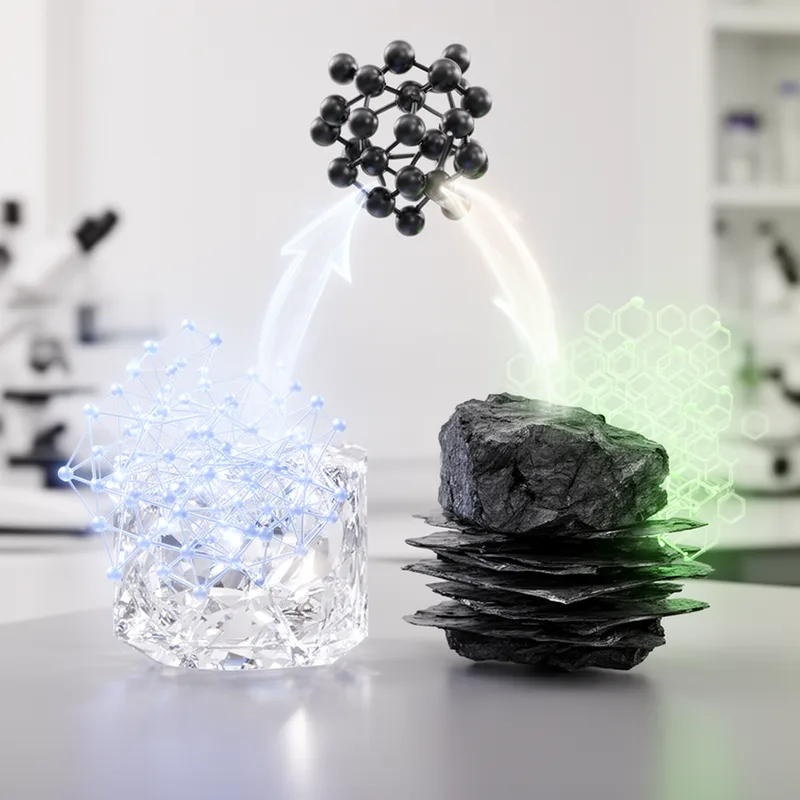
Carbon is an allotropic element, existing in forms like graphite and diamond, each with distinct properties.
Synonyms
Relating to an element that exists in two or more different forms in the same state, like diamond and graphite

A substance that can form different types of crystals
Surface Forms
Morphology
Etymology
Allotropic comes from the parts allo- meaning 'other' and -tropic meaning 'form' or 'way', so it literally says 'other form'. An allotropic element is one that can exist in two or more different forms while staying in the same state, such as diamond and graphite for carbon.

