
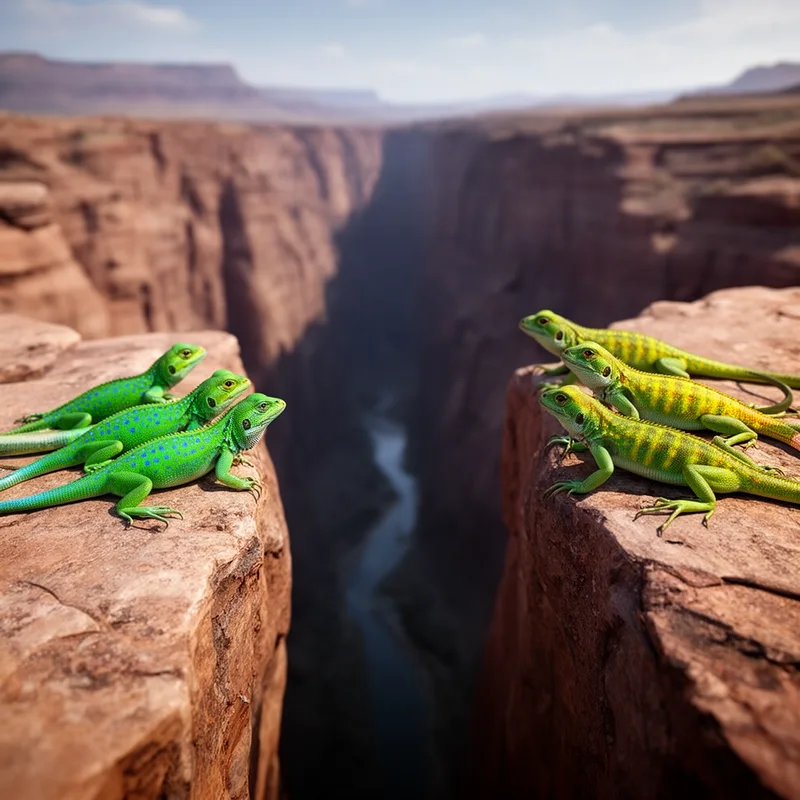
allopatry
- noun
- /ˌæləˈpætri/
- Specialized
- For several decades, Mayr was adamant that such isolation could evolve only in allopatry, not in sympatry.
Examples
-
Species can diverge rapidly from their mainland relatives once geographic separation has occurred—a process known as "allopatry."
Academic text (2009) -
Allopatry occurs when two closely related species live in different geographic areas and cannot interbreed.
-
The study of allopatry helps researchers understand how new species can evolve in isolation from one another.
-
In allopatry, populations of the same species may adapt to different environments, leading to significant genetic divergence.
Antonyms



How Geographically Separate
- Specialized

- Specialized

 1
9.9
Surface Forms
Morphology
allopatry = allo + patry
The term is formed from Greek combining forms (allo- + -patry) that are not standalone English words and the compound is a technical biological term, so an average B1 learner cannot derive its meaning from the parts.
Etymology
Allopatry comes from the Greek parts allo- 'other' and patry 'home'. So, allopatry describes related animals living in 'other places', which keeps them apart and stops them from breeding.