
sympatry


 1
9.9
- noun
- /sɪmˈpætri/
- Specialized
- For several decades, Mayr was adamant that such isolation could evolve only in allopatry, not in sympatry.
Examples
-
For decades, scientists have wondered about the mechanisms that allow so many tree species to coexist in sympatry.
Academic text (2012) -
In other taxa, certain varieties might be morphologically distinctive yet belong to the same species if they can successfully interbreed in regions of sympatry.
Academic text (2006) -
Most cases are allopatric, but an increasing number of examples have been found of multiple pollinator species living in sympatry.
Academic text (2005) -
The description of both genotypes occurring in sympatry without hybrid forms in an increasing number of countries supports the idea of two well-defined species.
Academic text (2014) -
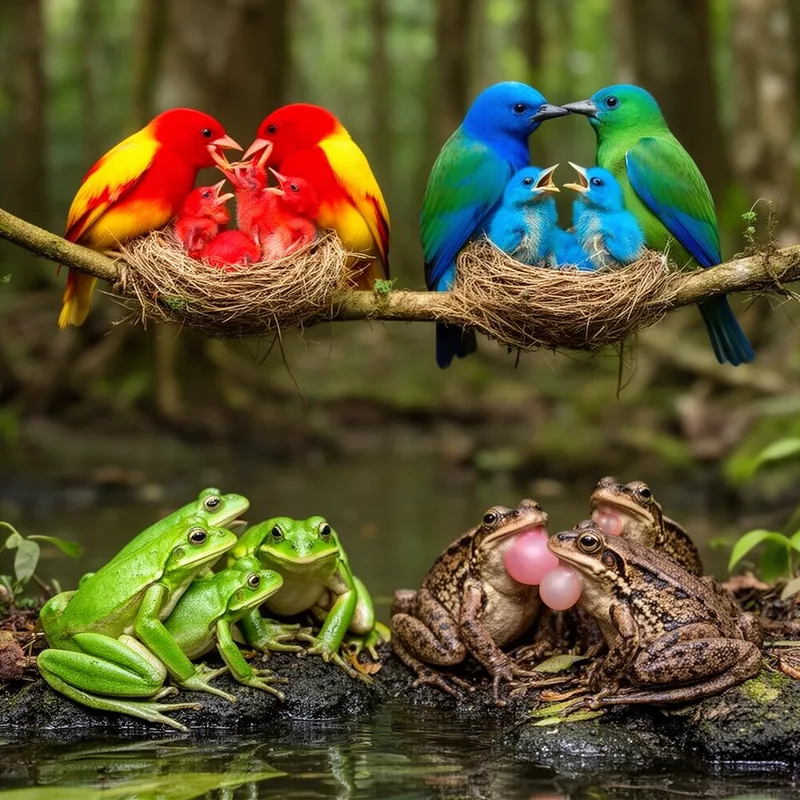
Scientists study how different bird species can thrive in the same habitat in sympatry without interbreeding.
-
In some rainforests, researchers have discovered multiple frog species living side by side in sympatry.
-
The occurrence of flowering plants in sympatry often leads to unique adaptations in pollinators.
Antonyms
How Geographically Separate
- Specialized

- Specialized
1
9.9
Surface Forms
Morphology
sympatry = sym + patry
Formed from Greek combining elements 'sym-' + '-patry' that are not productive or recognizable as standalone English words, so learners cannot derive the meaning from familiar English bases.
Etymology
Sympatry comes from the Greek parts sym- 'together' and patria 'homeland', so it gives the image of different animals living 'together in the same home'. That's why in biology sympatry describes species or populations that live in the same area but do not interbreed.