
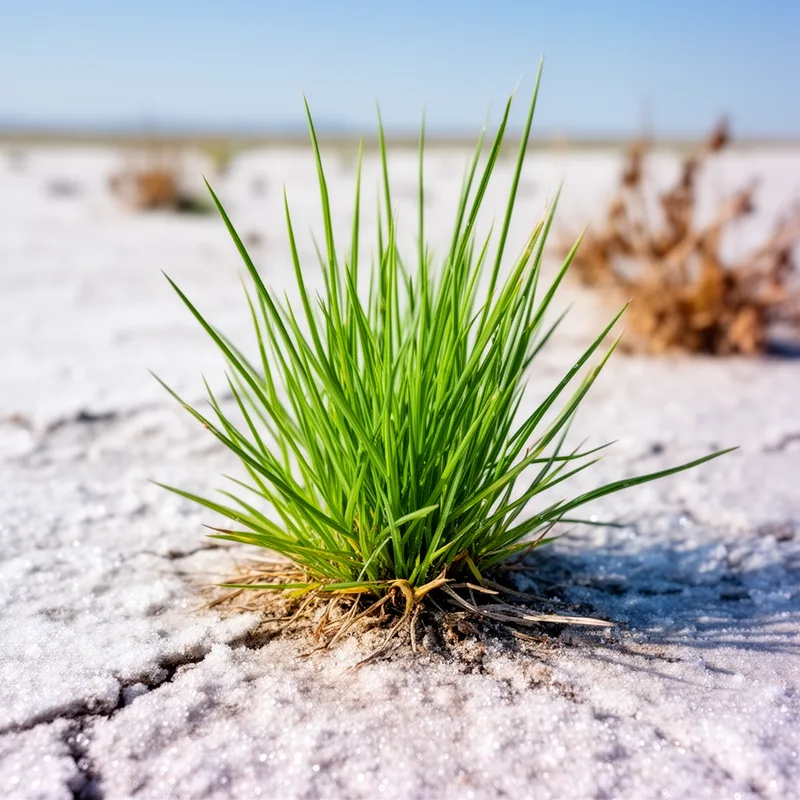
alkali grass
- noun
- /ˈæl.kə.laɪ ɡræs/
- US
- The alkali grass thrives in areas where few other plants can survive.
Examples
-
Many alkali grasses can tolerate high salinity.
-
Alfalfa is often planted alongside alkali grass in fields with saline soil.
-
Researchers are studying the resilience of alkali grass to better understand soil adaptation.
-
The alkali grass thrives in arid conditions.
-
In the desert, the alkali grass grows well despite the harsh conditions.
-
Farmers often rely on alkali grass to improve soil health in saline areas.
-
The alkali grass provides habitat for various small wildlife species in its ecosystem.
Synonyms
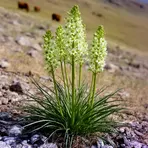
A poisonous plant from western North America with long thin leaves and pale greenish-white flowers
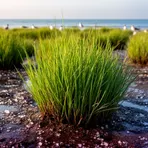
Grass that grows in salty soil near the sea or in marshes
Surface Forms
Morphology
The phrase is a straightforward modifier + noun combination: 'alkali' (relating to alkaline soils) modifies 'grass', so the phrase denotes grass associated with or tolerant of alkali/alkaline soils. Given knowledge of both constituents, a B1 learner can directly infer this compositional meaning without prior exposure.
Etymology
The plant name alkali grass comes from the kind of ground it grows in. Alkali means 'salty soil' and grass shows its grass-like leaves, so the name tells you it is a grass that lives where few other plants can grow.

