
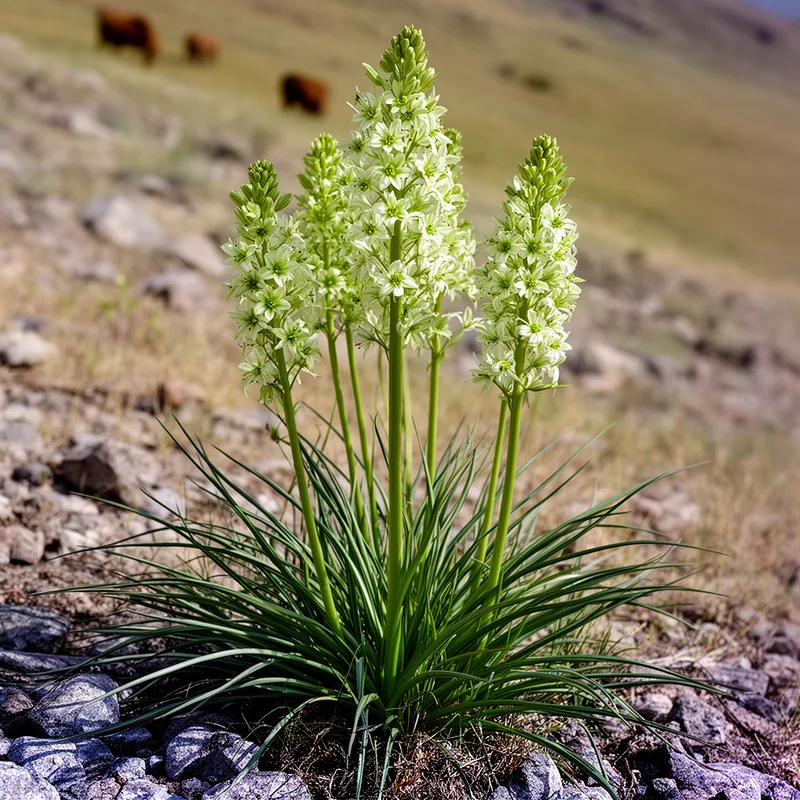
Zigadenus elegans
- noun
- Specialized
- The poisonous bulbs of Zigadenus elegans are easily mistaken for edible wild onions.
Examples
-
We found a cluster of Zigadenus elegans blooming along the rocky hillside.
-
Cattle are sometimes poisoned after grazing in areas where Zigadenus elegans grows abundantly.
-
I found a beautiful Zigadenus elegans in the garden.
-
The Zigadenus elegans blooms in early spring.
-
Cattle are sometimes poisoned after grazing in areas where Zigadenus elegans grows abundantly.
-
The poisonous bulbs of Zigadenus elegans are easily mistaken for edible wild onions.
-
We found a cluster of Zigadenus elegans blooming along the rocky hillside.
Surface Forms
Morphology
Zigadenus + elegans
This is a Linnaean binomial composed of a genus name (Zigadenus) and a species epithet (elegans, Latin for 'elegant'), so a learner who knows the constituents can transparently infer it refers to a particular plant species of the Zigadenus genus — likely the 'elegant' member of that genus. Binomial naming is a regular, cross-linguistic convention, so the meaning is compositionally predictable from the parts.
Etymology
Zigadenus elegans combines an older plant name, Zigadenus, with the Latin word elegans, meaning 'elegant'. Its small white flowers look graceful, but the bulbs are very 'poisonous', so the plant is often called 'death camas' and grazing animals can 'die' if they eat it.

