
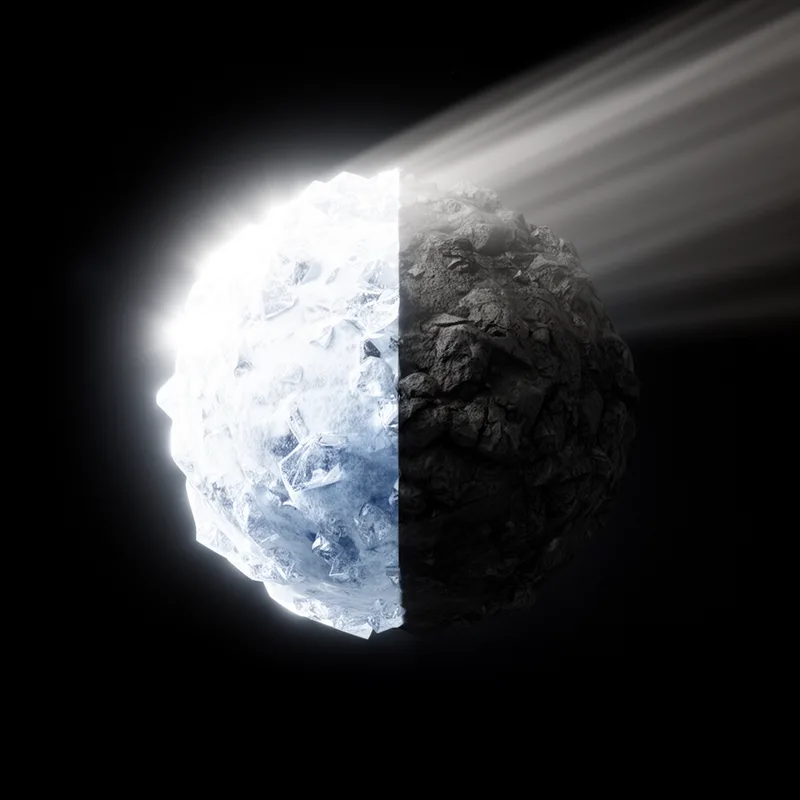
albedo
 7
9.9
7
9.9

- noun
- /ælˈbiːdoʊ/
- Specialized
- More snow in a colder climate makes the albedo larger, reflects more radiation, cools the Earth more, and that might spiral on itself.
- cloud albedo
- surface albedo
- albedo increases
Examples
-
Scientists measure the planet's albedo to understand its climate and energy balance.
-
First, they are going to increase the albedo—the reflectivity—of your polar ice caps.
Fiction book (2001) -
The low albedo is probably due to the presence of a dust crust.
Academic text (1992) -
Forests are very dark in their coloration, their albedo is very low.
-
And as you decrease the sea ice, you uncover the low albedo ocean below.
-
However, from what is known today, increasing the earth's albedo offers the most promising method for rapidly cooling the planet.
Academic text (2009) -
During summer, divergence of the ice controls the abundance of open water and alters the albedo feedback.
Academic text (2011) -
Water's radiative properties determine the magnitude of the greenhouse effect, the planetary albedo, and hence Earth's surface temperature.
Academic text (2012) -
Most schemes that would alter the earth's albedo envision putting reflective particles into the upper atmosphere, much as volcanoes do already.
Academic text (2009) -
The surface of the moon has a low albedo, which means it reflects very little light.
Synonyms
 1
6.1
1
6.1
How much light or heat a surface sends back
 1
7.9
1
7.9
The amount of light a surface sends back
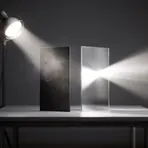
Part of light that bounces off a surface, like a mirror
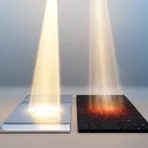
Part of incoming light or heat that bounces off a surface

How much light a surface sends back when light hits it
How Reflective

Surface Forms
Etymology
Albedo comes from the Latin root albus, meaning 'white', and the same root appears in albino. So albedo is a measure of 'whiteness' that tells how much light a surface reflects, with whiter surfaces sending back more light.