
agon


 1
9.9
- noun
- /ˈæɡən/
- Archaic
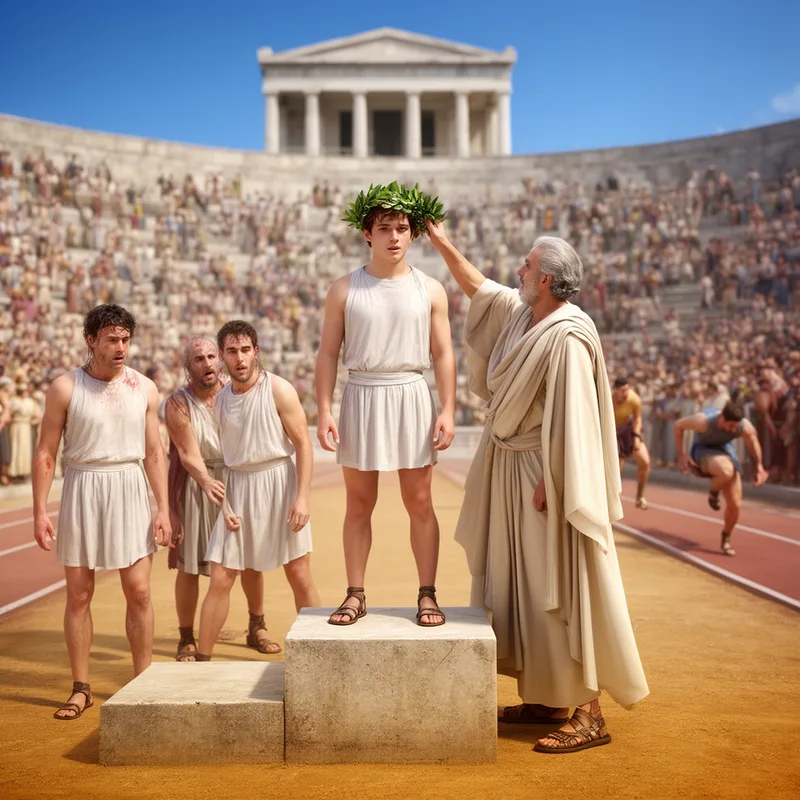
- The annual agon in Athens attracted the best athletes from across Greece, all eager to win glory.
Examples
-
The coal-camp Post Office fostered the more inventive and high-stepping modes of "talk": tall tales, agons of mock insults, and brand new gossip.
Academic text (1992) -
In the United States, the agon was purely internal.
Academic text (1996) -
Thus, they mask play as agon.
Academic text (1994) -
In more than a dozen non-canonical Golden Age comic plays, the dramatic agon stems from the male protagonist's attempts to reconcile the competing and conflicting demands of homosocial and heterosexual bonds.
Academic text (2002) -
The ancient Greeks held an agon to showcase their athletic skills and compete for prizes.
-
During the agon, poets and musicians also competed for fame and recognition among their peers.
Synonyms

Contests like sports or drama in ancient Greece
Surface Forms
Etymology
Agon comes from the ancient Greek word agōn, which meant 'contest' or 'struggle'. So an agon was a public contest where competitors struggled for prizes, and you can see the same root in agony (which originally meant a hard 'struggle') and antagonist (an opponent).