
agonistics
- noun
- Archaic
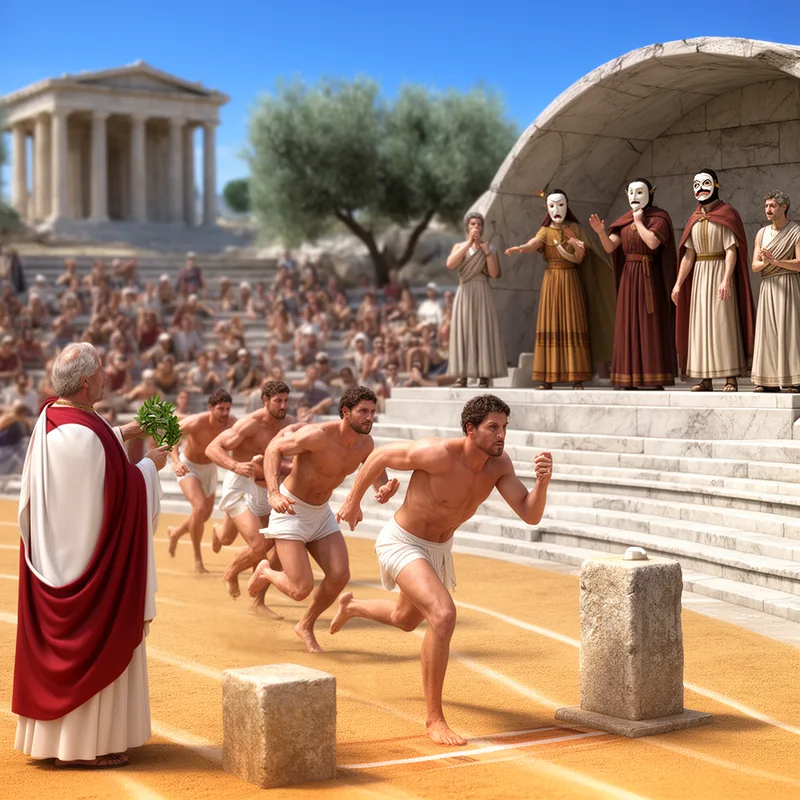
- The Olympic Games were the most famous agonistics in ancient Greece.
Examples
-
The ancient Greeks celebrated agonistics through various athletic competitions.
-
Winners of the agonistics were celebrated as heroes in their city-states.
-
Historians study agonistics to understand the culture and values of early civilizations.
-
In agonistics, athletes competed for glory and honor.
-
The ancient Greeks held various agonistics, where athletes showcased their skills in public competitions.
-
Success in the agonistics of ancient Greece often led to fame and admiration from the community.
-
The agonistics of ancient Greece included events like wrestling, running, and dramatic performances.
Synonyms

 2
2.5

A competition where people or teams compete in sports

 1
9.9
A public contest in ancient Greece where people compete for prizes
How Competitive

Surface Forms
Morphology
agonistics = agonistic (opaque) = agon + istic + s
Although formed from the Greek combining form 'agon-' and the academic suffix pattern ('-istic' → '-agonistics'), the historical sense referring specifically to ancient Greek contests is not directly inferable by average learners.
Etymology
Agonistics comes from the Greek root agon meaning 'contest' or 'struggle', the same root as the words agony and agonize. Think of athletes in an ancient arena fighting to win, and you see why agonistics refers to contests like the Olympic events.