
adenylic acid
- noun
- /əˈdɛnɪlɪk ˈæsɪd/
- Specialized
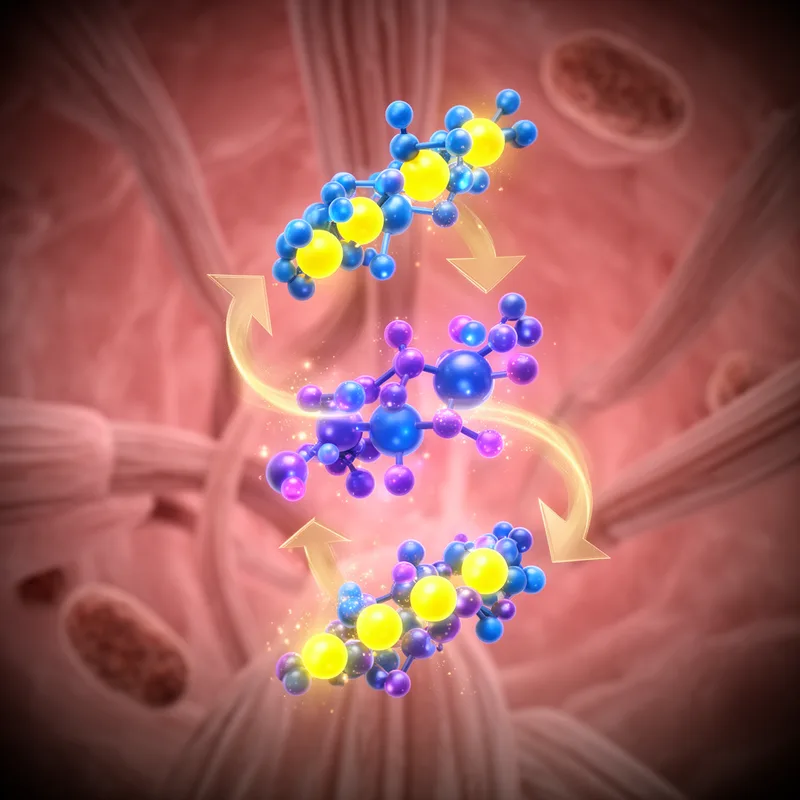
- The reversible conversion of adenylic acid to ADP and ATP is essential for cellular energy transfer.
Examples
-
Researchers studied the concentration of adenylic acid in muscle tissue during intense exercise.
-
A deficiency in adenylic acid may impair the body's ability to generate energy efficiently.
-
The body produces adenylic acid during intense exercise.
-
Can you explain the role of adenylic acid in metabolism?
-
The reversible conversion of adenylic acid to ADP and ATP is essential for cellular energy transfer.
-
Researchers studied the concentration of adenylic acid in muscle tissue during intense exercise.
-
A deficiency in adenylic acid may impair the body's ability to generate energy efficiently.
Synonyms

 11
6.8
11
6.8

A small chemical in muscle cells that helps make ATP for energy

A small molecule in cells that helps store and transfer energy
Surface Forms
Morphology
adenylic + acid
The modifier 'adenylic' is a specialized biochemical/formative root unfamiliar to average B1 learners and not transparently decomposable into common English words, so its link to nucleotides, ADP/ATP metabolism, or muscle cells is not inferable. Although 'acid' signals a chemical substance, that alone does not allow a learner to derive the specific nucleotide/metabolic meaning, so the expression is opaque.
Etymology
Adenylic acid may get its name from the chemical base adenine, a word from Greek for 'gland' because the base was first found in gland tissue. Adenylic acid is the acid form attached to that base and is a cell building block that helps store and move 'energy' as it changes into ADP and ATP.