
acrylamide
 2
9.9

- noun
- /əˈkrɪləˌmaɪd/
- Specialized
- The federal limit for acrylamide in drinking water is 0.5 parts per billion, or about 0.12 micrograms in an eight-ounce glass of water.
- acrylamide gel
Examples
-
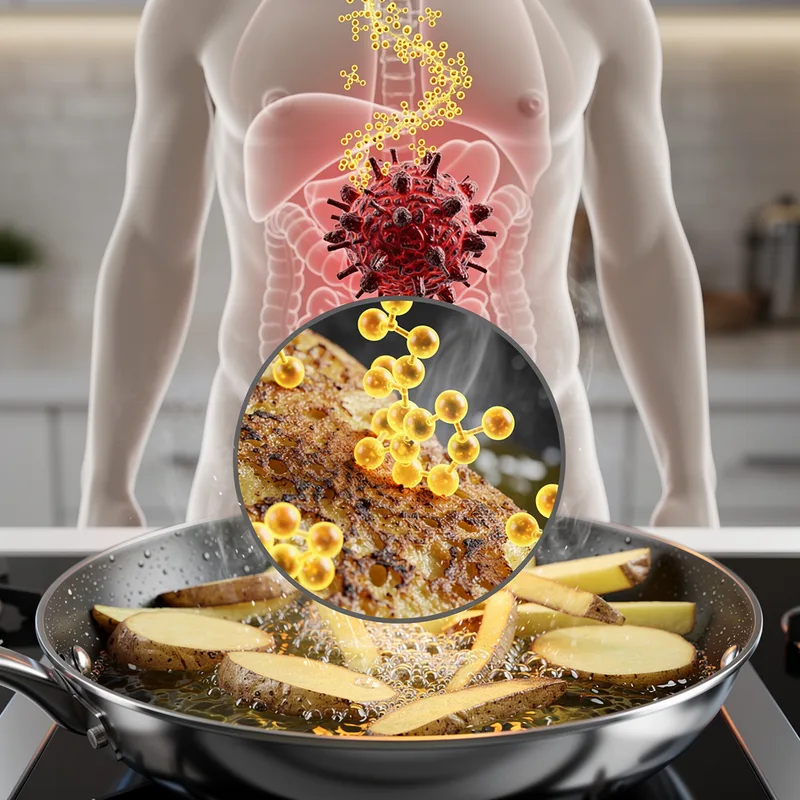
Acrylamide forms from a reaction between sugars and an amino acid (asparagine) during high-temperature cooking.
Blog text (7) -
You're probably already aware that French fries and potato chips are not health foods, but remember that acrylamide is formed not only when foods are fried, but also when they are baked.
Blog text (7) -
Exposure to acrylamide increases cancer risk.
Blog text (7) -
In addition, acrylamides are relatively easy to remove from the diet.
Blog text (18) -
However, a six-ounce serving of French fries can contain 60 micrograms of acrylamide, or about 500 times over the allowable limit.
Blog text (7) -
And baked chips, which are often regarded as healthier, may contain more than three times the level of acrylamide as regular chips, according to U.S. Food and Drug Administration data (FDA).
Blog text (7) -
While the EPA regulates acrylamide in drinking water and the FDA regulates the amount of acrylamide residue in materials that may come in contact with food, they do not currently have any guidelines limiting the chemical in food itself.
Blog text (7) -
A settlement was reached in 2008 when Frito-Lay and several other potato chip makers agreed to reduce the acrylamide levels in their chips to 275 parts per billion (ppb) by 2011, which is low enough to avoid needing a cancer warning label.
Blog text (7) -
Charring causes acrylamides and other carcinogens (heterocyclic amines, polycyclic aromatic hydrocarbons) to be produced.
Blog text (25) -
Coffee is in the hot seat because of acrylamide, a chemical produced during the roasting process.
How Toxic

Surface Forms
Morphology
acrylamide = acrylic (semi-transparent) = acryl + amide
Formation follows regular chemical naming (acryl- + -amide) indicating an amide derivative of an acryl group, but understanding requires technical chemistry knowledge not available to a typical B1 learner.
Etymology
Acrylamide joins acryl, from 'acrylic' as in acrylic paint or plastic, and amide, from 'ammonia' meaning 'related to ammonia'. So acrylamide is a specific chemical with an acrylic-like part and an 'amide' group, which helps you remember it is an industrial compound that can also form in foods cooked at high heat.