
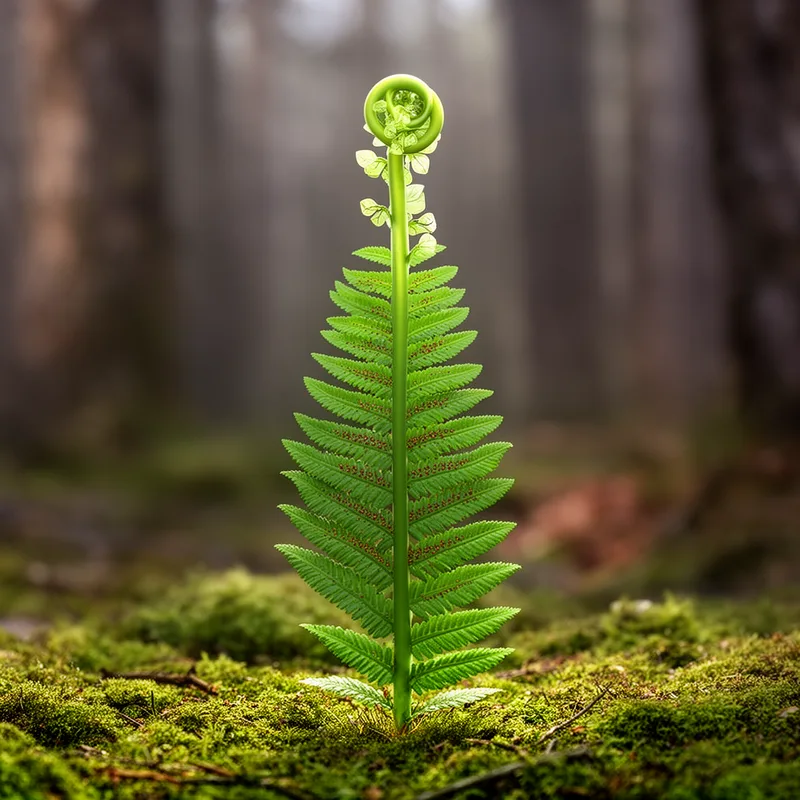
acrogen
- noun
- /ˈækrəˌdʒɛn/
- Specialized
- An acrogen grows only at the tip of its main stem, allowing it to reach towards light.
Examples
-
Unlike most flowering plants, acrogens lack true flowers and seeds.
-
Ferns and mosses are typical examples of acrogens in the plant kingdom.
-
The structure of an acrogen allows it to grow continuously from the tip.
-
An acrogen thrives in moist environments.
-
Many acrogens can be found in shaded areas.
-
Ferns and mosses are typical examples of acrogens in the plant kingdom.
-
The unique growth pattern of acrogens means they can flourish in environments without flowers.
Synonyms


 1
4.6
A plant that has tubes that carry water and food and makes spores instead of flowers or seeds
 1
4.4
A plant that does not make flowers, like ferns or mosses
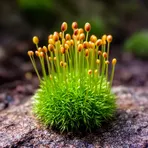
A moss that grows upright in small clumps and makes its spore case at the tip of the main stem
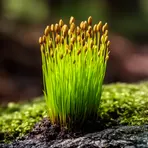
A moss that grows upright with its spore case at the top of the main stem
Surface Forms
Morphology
acrogen = acro + gen
The word is built from Greek combining elements (acro- + -gen) that are not productive standalone English morphemes and thus unlikely to be transparently understood by an average B1 learner.
Etymology
The word acrogen comes from Greek parts acro- meaning 'top' and -gen meaning 'born' or 'to produce', like in acrobatic and generate. So an acrogen is a plant that 'grows from the tip', which explains why ferns and mosses are acrogens.