
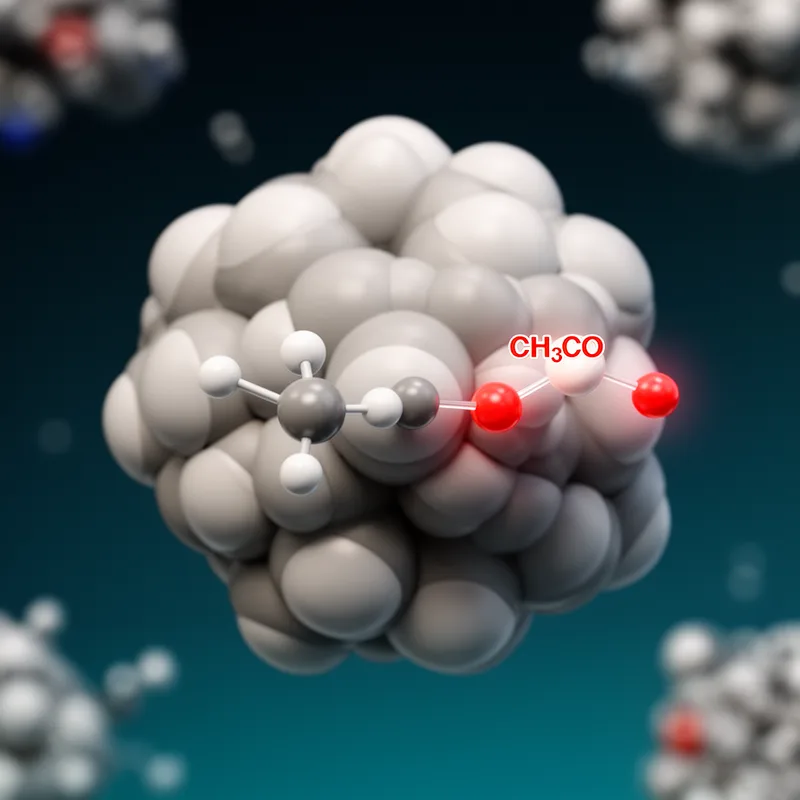
acetyl group
- noun
- /əˈsiːtəl ɡruːp/
- Specialized
- Adding an acetyl group to the compound changes its properties.
Examples
-
Enzymes often transfer an acetyl group during metabolic reactions.
-
The acetyl group is commonly found in many biological molecules.
-
The acetyl group is essential in organic chemistry.
-
Many drugs contain an acetyl group in their structure.
-
An acetyl group is often added during chemical reactions to modify the properties of organic compounds.
-
In biochemistry, the addition of an acetyl group to a molecule can significantly impact its function.
-
The presence of an acetyl group in a molecule can enhance its solubility in organic solvents.
Synonyms

 1
9.3
1
9.3

A small chemical group made from acetic acid that attaches to other molecules
A small part of a molecule with formula CH3CO that changes how the molecule reacts, also called an acetyl group
A part of a molecule used in chemistry, formed from the acid in vinegar, written CH3CO
A small group of atoms from acetic acid that can attach to other molecules
Surface Forms
Morphology
This is a straightforward compositional technical noun phrase: 'acetyl' names a residue derived from acetic acid and 'group' denotes a bonded assembly of atoms, so the combined meaning 'the CH₃CO– functional group' is directly derivable from the constituents. Although domain-specific, the noun+noun chemistry naming pattern is regular (and parallels forms in other languages), so a learner who knows both constituent meanings will understand the MWE.
Etymology
The name acetyl group comes from acetyl, from the word 'acetic' meaning the acid in vinegar, and group, meaning a small part that attaches to a molecule. Imagine a tiny piece like vinegar sticking to a larger molecule and changing how it behaves, and that's why adding an acetyl group often changes a compound's properties.