
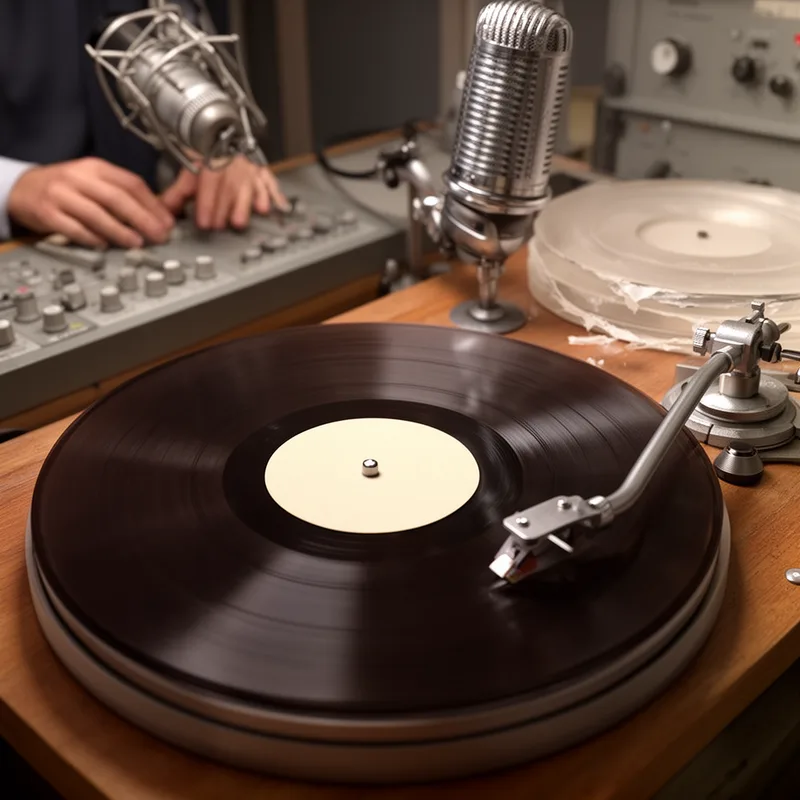
acetate disk
- noun
- /ˈæsəˌteɪt dɪsk/
- Archaic
- Sound engineers often used an acetate disk to make instant recordings in the studio.
Examples
-
He found several old acetate disks in the attic.
-
Many early radio broadcasts were preserved on acetate disks before magnetic tape became popular.
-
The acetate disk began to deteriorate due to improper storage conditions.
-
The musician recorded her new song on an acetate disk.
-
The musician played her latest song on an acetate disk during the live session.
-
In the early days of recording, many artists relied on acetate disks to capture their performances.
-
The engineer carefully placed the acetate disk on the turntable to create a temporary recording.
Synonyms

A flat disk used to make and play sound on an old record player
How Durable
 4
3.2
4
3.2


- Archaic
1
6.6
- Specialized
- Archaic
Surface Forms
Morphology
The meaning is directly compositional: 'acetate' names the chemical material and 'disk' names a record, so the phrase denotes a disk made of or coated with acetate used for recordings. Although somewhat technical, this noun–noun compound follows regular formation patterns and a B1 learner who knows both constituents can infer the intended sense.
Etymology
Acetate disk comes from the idea of a disk with a thin plastic layer called acetate. In old studios, engineers coated a disk with shiny acetate and recorded sound directly into that soft layer to make quick, one-off copies, so the term refers to a disk used for 'temporary recordings'.