

absolute viscosity
- noun
- /ˈæb.sə.luːt vɪˈskɒs.ɪ.ti/
- Specialized
- When the absolute viscosity of a liquid is high, it flows very slowly.
Examples
-
Engine oils are often rated by their absolute viscosity at different temperatures.
-
Chemists measure absolute viscosity using a viscometer in the laboratory.
-
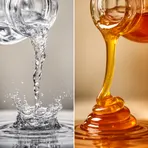
The absolute viscosity of water is relatively low.
-
Can you explain absolute viscosity in simple terms?
-
Chemists measure absolute viscosity using a viscometer to determine how easily a fluid flows.
-
When the absolute viscosity of a liquid increases, it indicates greater resistance to flow.
-
The absolute viscosity of motor oil varies by temperature, affecting its performance in engines.
Synonyms
 8
7.1
8
7.1

How thick and sticky a liquid is so it flows slowly
 3
4.0
3
4.0
How slowly a liquid flows, for example honey

A number that shows how thick a liquid is and how hard it is to make it flow

The thickness or stickiness of a liquid that makes it flow slowly

The thickness of a liquid that makes it flow slowly
Surface Forms
Morphology
The headword 'viscosity' already denotes resistance to flow, and adding 'absolute' suggests an intrinsic or definite value of that property, so a learner who knows both words can grasp the general idea that it refers to a measure of resistance to flow. However, the precise technical meaning (the ratio of shear stress to shear rate, distinction from kinematic/apparent viscosity) is specialized and not fully predictable from the constituents alone, so some domain knowledge is needed.
Etymology
Absolute viscosity combines absolute (meaning fixed or real) and viscosity (the stickiness of a liquid). Think of honey: because it is sticky and moves slowly, absolute viscosity is the measured 'resistance to flow' that tells how hard a liquid is to move, so the name points to the liquid's real resistance to flow.