
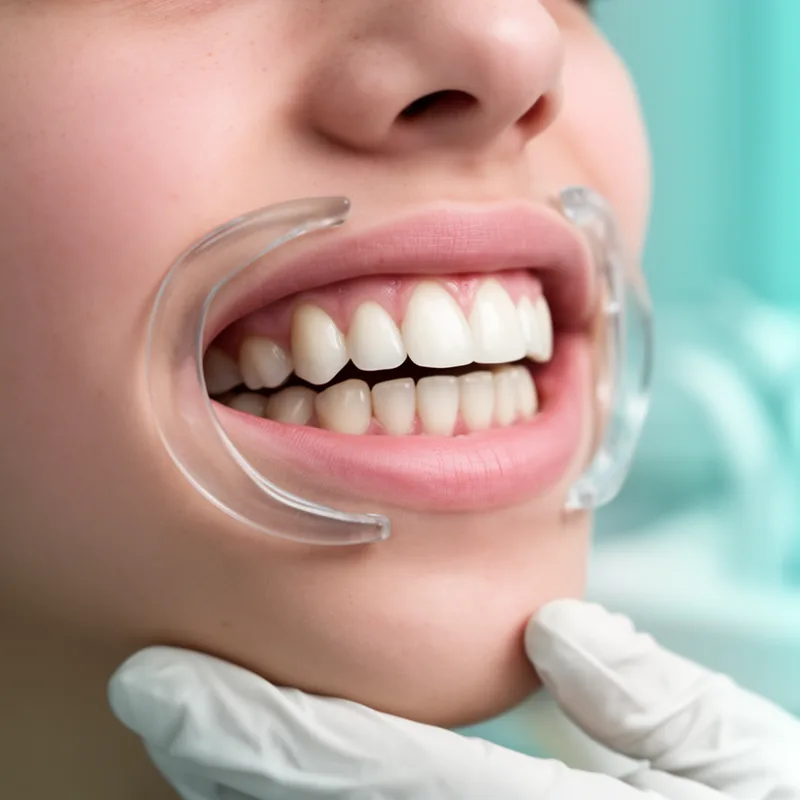
abocclusion
- noun
- /ˌeɪbəˈkluːʒən/
- Specialized
- The orthodontist diagnosed her with abocclusion, explaining why her teeth did not come together properly.
Examples
-
The orthodontist diagnosed her with abocclusion, explaining how her upper teeth do not touch the lower ones when biting.
-
Correcting abocclusion often requires orthodontic treatment to realign the bite.
-
Because of his abocclusion, chewing certain foods was difficult and uncomfortable.
-
The dentist diagnosed her with abocclusion.
-
Many patients suffer from abocclusion without realizing it.
-
Many patients suffer from abocclusion, which can lead to discomfort while eating if left untreated.
-
Correcting abocclusion typically involves braces or other orthodontic devices to help align the bite properly.
Synonyms


 1
8.3
Upper and lower teeth do not fit together when the mouth is closed
A dental problem where the upper and lower front teeth do not touch when the jaw is closed
Antonyms
Surface Forms
Morphology
Etymology
Abocclusion breaks into ab- meaning 'away' and occlusion meaning 'closing'. So it pictures teeth that are 'away from closing' and do not meet when the jaws come together.