
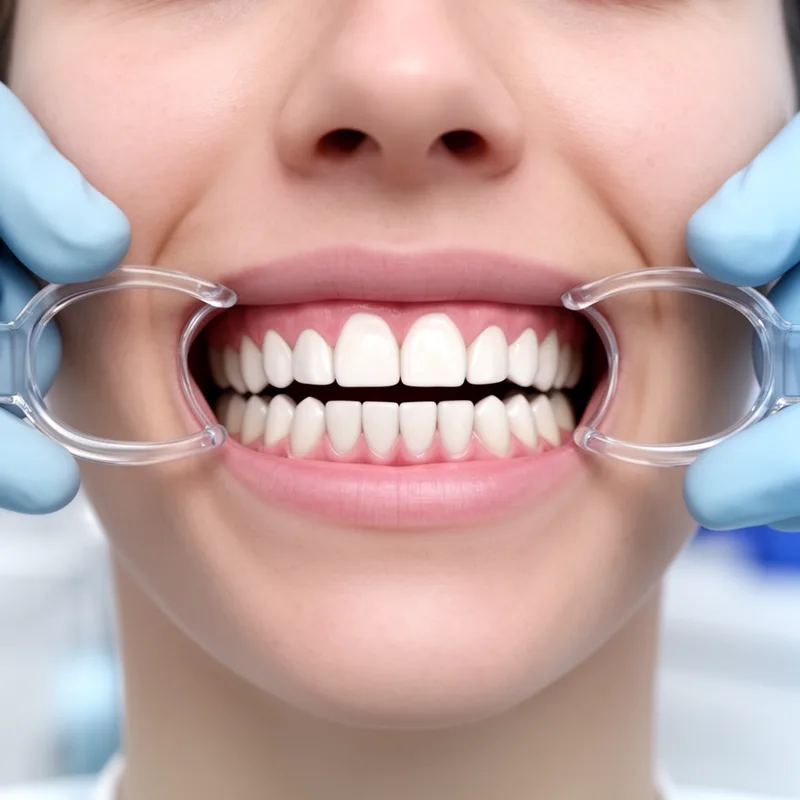
occlusion
- noun
- /əˈkluːʒən/
- Specialized
- She was advised to improve her occlusion to prevent potential dental issues.
- dental occlusion
Examples
-
An orthognathic (Angle class 1) relationship refers to normal occlusion and facial proportion.
Academic text (1999) -
The dentist explained that the occlusion of my teeth is important for a healthy bite.
-
The findings of our study support previous research that showed that occlusion status did not affect swallowing ability.
Academic text (2006) -
If they are coming into proper occlusion (bite), then you can often leave them alone.
Blog text (16) -
However, in doing so, it is important to maintain a stable dental occlusion and a balanced aesthetic appearance.
Academic text (1999) -
To maintain dental occlusion, either arch bars or orthodontic bands are required prior to osteotomy.
Academic text (1999) -
At this time, we are able to state only that we observed an association between occlusion status and accumulated oropharyngeal secretions.
Academic text (2006) -
Proper dental occlusion ensures that the upper and lower teeth align correctly when the mouth is closed.
Antonyms


Compounds


How Aligned
- Specialized

- Specialized

 1
8.3
1
8.3
Surface Forms
Morphology
Etymology
Occlusion comes from the Latin occludere and its parts ob- 'against' and claudere 'to close', so imagine the upper and lower teeth 'closing' against each other when you bite. That's why in dentistry occlusion means how the teeth meet.