

Yom Kippur
 7
5.8
7
5.8

- noun
- /joʊm kɪˈpʊr/
- Why is the holiday of Sukkot placed in such close proximity to Yom Kippur?
- Yom Kippur War
- the day of Yom Kippur
Examples
-
Sukkot is the remedy for the issues we identified on Yom Kippur.
Blog text (4) -
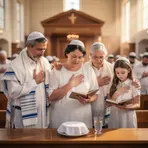
Many people gather in their synagogues to pray during Yom Kippur, the holiest day in the Jewish calendar.
-
Several Yom Kippur services are going on in different rooms.
Fiction book (2001) -
But why does it need to come just 5 days after Yom Kippur?
Blog text (4) -
Of course, fasting on Yom Kippur is not supposed to be comfortable.
Blog text (33) -
The Kol Nidre is the holiest Jewish prayer and is recited several times on Yom Kippur, the Day of Atonement.
Blog text (28) -
Ultra-Orthodox rabbis have stepped up their campaigns against smartphones in the lead-up to Yom Kippur, a period of religious introspection.
Blog text (3) -
The decree by Rabbi Chaim Kanievsky, 84, came ahead of Judaism's holiest day, Yom Kippur, which begins Tuesday.
Blog text (3) -
On Yom Kippur, observant Jews fast and reflect on their actions over the past year.
-
The Day of Atonement, known as Yom Kippur, is a time for repentance and seeking forgiveness in the Jewish faith.
Synonyms
 2
6.9
2
6.9
A Jewish holy day when people fast, pray, and ask forgiveness
Surface Forms
Morphology
yom + Kippur
Yom Kippur is a Hebrew proper name for a specific religious observance; although 'yom' means 'day', 'Kippur' is not transparent or defined for English learners here, and the holiday’s ritual meaning (atonement, fasting) requires cultural/lexical knowledge beyond the literal parts. Therefore an average B1 learner who only knows the constituent words (as given) would not be able to derive the holiday meaning, making the expression effectively opaque.
Etymology
Yom Kippur comes from Hebrew words: yom means 'day' and kippur means 'atonement'. It is the 'day of atonement' when people fast, pray, and ask for 'forgiveness', so the name explains the holiday's meaning today.