
Xylocaine
 1
7.0
1
7.0

- noun
- /ˈzaɪləˌkoʊn/
- Specialized
- For her tattoo, she requested an injection of Xylocaine to minimize discomfort.
- Xylocaine with epinephrine
- Xylocaine for surgery
- 1% Xylocaine
Examples
-
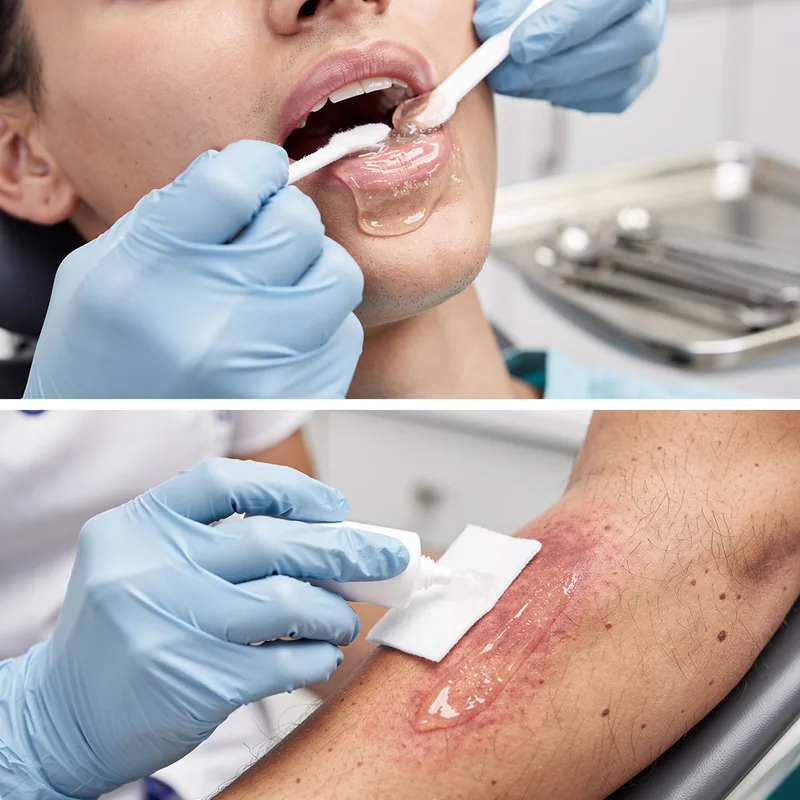
The dentist used Xylocaine to numb my gums before the procedure.
-
Before stitching the wound, the doctor applied Xylocaine to reduce the pain.
-
And for how long will the Xylocaine keep it from hurting?
Fiction book (1993) -
Now we inject a little Xylocaine into the skin.
Fiction book (1993) -
I adjust the light and begin the numbing with an injection of Xylocaine.
Fiction book (2000) -
He then got the doctor to inject his hand with Xylocaine to reduce the pain.
Academic text (2009) -
In preparation for surgery, 2% Xylocaine was injected for most of the superficial area.
Academic text (2007) -
Xylocaine 1% without epinephrine was used as a local anesthesia field block before Artecoll injection for lip augmentation; ice was applied to all other facial injection sites.
Academic text (2012)
Synonyms
 18
6.7
18
6.7
A medicine that numbs a small area of skin or mouth
Surface Forms
Etymology
Xylocaine is a brand name for the numbing drug lidocaine. Its parts are xyl(o)- 'wood', like the older name lignocaine, and -caine, as in cocaine, which marks it as a numbing medicine. So a helpful way to remember Xylocaine is that it is used to numb skin and the inside of the mouth.