

Viola canina
- noun
- Specialized
- The Viola canina brightened the woodland floor with its delicate blue flowers.
Examples
-
She planted several Viola canina in her garden to attract butterflies.
-
Botanists studied the habitat preferences of Viola canina in different European regions.
-
The Viola canina blooms beautifully in spring.
-
I found a patch of Viola canina in the garden.
-
The Viola canina flourished in the shaded areas of the garden, adding vibrant color with its lilac flowers.
-
In spring, the Viola canina can be seen dotting the landscape with beautiful blue blooms.
-
She carefully watered the Viola canina she planted, hoping it would thrive and attract bees.
Synonyms
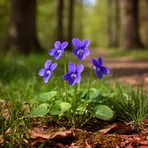
A small wild flower with blue or purple petals that grows in woods and meadows
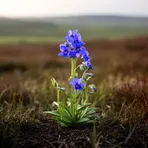
A small plant with blue flowers that grows on open wild land
Surface Forms
Morphology
Viola + canina
This is a Latin binomial (scientific) name: 'Viola' denotes the genus (violets) and 'canina' is a species epithet. If a learner knew 'Viola' as a violet and 'canina' as a modifier (often meaning 'dog-like' in Latin), they could infer it refers to a particular type of violet, but species epithets are specialized and not part of everyday compositional meaning for B1 learners. Because part of the meaning is derivable yet depends on knowledge of scientific naming and an uncommon Latin epithet, the expression is only partially transparent.
Etymology
Viola canina comes from Latin: Viola means 'violet' and canina means 'dog'. People called this a 'dog violet' because it is a wild, common kind of violet rather than the sweet garden kind, so the name helps us remember that Viola canina is a small wild violet.

