

Victoria plum
- noun
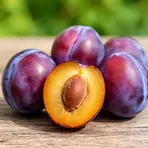
- The Victoria plum is prized for its sweet taste and juicy flesh.
Examples
-
I bought some Victoria plums at the market.
-
We made a delicious tart using fresh Victoria plums from the garden.
-
Every summer, my grandmother would preserve jars of Victoria plum jam.
-
The Victoria plum is my favorite fruit.
-
The dessert was topped with slices of Victoria plum, which added a sweet flavor.
-
For our picnic, we packed a pie made with fresh Victoria plums from the farmer's market.
-
She loved making jam with Victoria plums because of their rich sweetness.
Synonyms
 50
1.0
50
1.0

A small round or oval fruit with smooth skin and one hard stone
 1
4.8
1
4.8
A wild plum tree from eastern and central North America with red fruit and yellow flesh


 1
9.1
1
9.1
A small sweet yellow or red plum often used to make jam and desserts

A fruit tree that grows sweet plums to eat or make jam

A tropical American shrub or small tree with edible fruit like a plum used in jams and desserts

A small plum-shaped tropical fruit with light to dark skin used to make jam

A small yellow fruit with a large stone and little flesh used for jam

A small dark purple fruit that grows on coastal shrubs and people use to make jam

A brown oval fruit with sweet, tangy flesh used for making sherbet
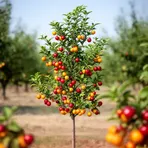
A small Asian tree that makes small round fruit like a cherry or plum
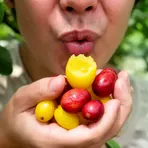
A small yellow or red fruit with a sour taste

A small tart fruit from a tree or bush that grows naturally
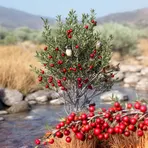
A small wild bush on the US west coast that has small red fruit often too bland to eat
How Sweet

Surface Forms
Morphology
Victoria + plum
The compound is a proper-name modifier + noun (Victoria + plum), so a learner who knows 'Victoria' as a name and 'plum' as the fruit can readily infer this refers to a specific variety or type of plum. They may not know cultivar-specific details (color or taste) without exposure, but the basic meaning 'a kind of plum' is transparently derivable from the constituents.
Etymology
Victoria plum comes from Queen Victoria; one popular story says a very large, sweet plum was sent to celebrate her in the 1800s. That's why growers kept the name, and today Victoria plum means this particular large, sweet fruit often eaten as a 'dessert'.