

Vaccinium vitis-idaea
- noun
- Specialized
- The Vaccinium vitis-idaea thrives in the cool forests of Scandinavia, where its berries are harvested in late summer.
Examples
-
Jams made from Vaccinium vitis-idaea are popular accompaniments to meat dishes in Northern Europe.
-
Scientists are studying the antioxidant properties of the fruit produced by Vaccinium vitis-idaea.
-
The Vaccinium vitis-idaea is often found in the wild.
-
Many people enjoy the Vaccinium vitis-idaea berries in jams.
-
In Sweden, Vaccinium vitis-idaea is often used to make a tangy sauce that pairs beautifully with meat dishes.
-
The Vaccinium vitis-idaea produces bright red berries that are rich in vitamins and are enjoyed in various culinary recipes.
-
During the autumn, many hikers in Norway search for Vaccinium vitis-idaea berries, which are a delicious addition to desserts.
Synonyms
 1
8.3
1
8.3

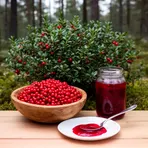
A small tart red berry from a low evergreen bush used in jams and sauces

A low evergreen shrub from northern places that makes small tart red berries
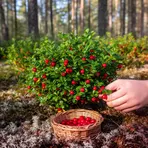
A low green bush that grows in northern forests and has small red berries you can eat
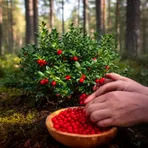
A small evergreen bush that makes red berries you can eat

A low evergreen bush in northern forests that has small tart red edible berries

A low bush with small red berries that people eat
Surface Forms
Morphology
Vaccinium + vitis-idaea
This is a Latin binomial combining the genus name Vaccinium (which signals a plant related to blueberries/cranberries) with a species epithet vitis-idaea. A B1 learner who knows 'Vaccinium' can therefore infer it denotes a kind of plant/berry, but the specific epithet is Latin and not semantically transparent to most learners, so details like 'lingonberry' or the shrub's characteristics are not directly derivable. Scientific names are cross-linguistically used, giving partial cueing, but the full meaning requires specialized knowledge.
Etymology
Vaccinium vitis-idaea may come from old Latin and Greek words: vitis means 'vine' and idaea refers to 'Mount Ida'. So the name gives the image of a small, vine-like plant with red berries, a handy way to remember the shrub we call the 'lingonberry'.