
Vaccinium pennsylvanicum
- noun
- Specialized
- Wild berries of Vaccinium pennsylvanicum are often harvested for use in jams and pies.
Examples
-
The Vaccinium pennsylvanicum thrives in the acidic soils of northeastern forests.
-
Researchers study the nutrition value of Vaccinium pennsylvanicum berries due to their high antioxidant content.
-
The Vaccinium pennsylvanicum thrives in acidic soils.
-
Many gardeners love to plant Vaccinium pennsylvanicum for its berries.
-
Many gardeners appreciate Vaccinium pennsylvanicum for its sweet, dark blue berries that they use in various desserts.
-
The low-growing shrub, Vaccinium pennsylvanicum, is well-suited to thrive in the cool, acidic soils found in northeastern woodlands.
-
During the summer, the flowers of Vaccinium pennsylvanicum bloom, attracting bees and other pollinators to the garden.
Synonyms

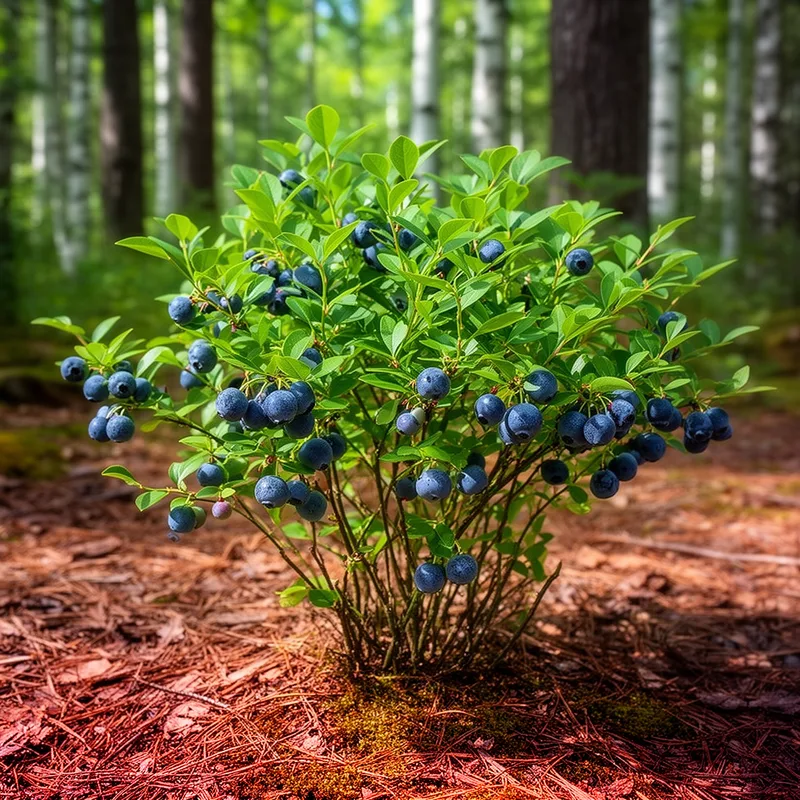
A low-growing shrub that has sweet dark blue berries in small groups

A small low shrub with sweet dark blue berries

A low bush in northeastern North America that makes small sweet dark blue berries
Surface Forms
Morphology
Vaccinium + pennsylvanicum
The genus name Vaccinium clearly signals a type of shrub that includes blueberries/cranberries, so a learner who knows that constituent can infer this is a species of Vaccinium (i.e., a berry-producing shrub). However, the species epithet 'pennsylvanicum' is a Latinized form (not a standard English word) and its specific meaning/common-name identity (lowbush blueberry) is not directly recoverable by a B1 learner without botanical or Latin knowledge. Because part of the meaning is recoverable from the genus but the precise species identity/common-name is not, the expression is only partially predictable.
Etymology
Vaccinium pennsylvanicum comes from Latin words: Vaccinium was used for berry plants like blueberries, and pennsylvanicum means 'from Pennsylvania'. So the name gives a simple picture of a low blueberry shrub from the northeastern US, helping you remember it is the 'lowbush blueberry' with small dark blue berries.

