
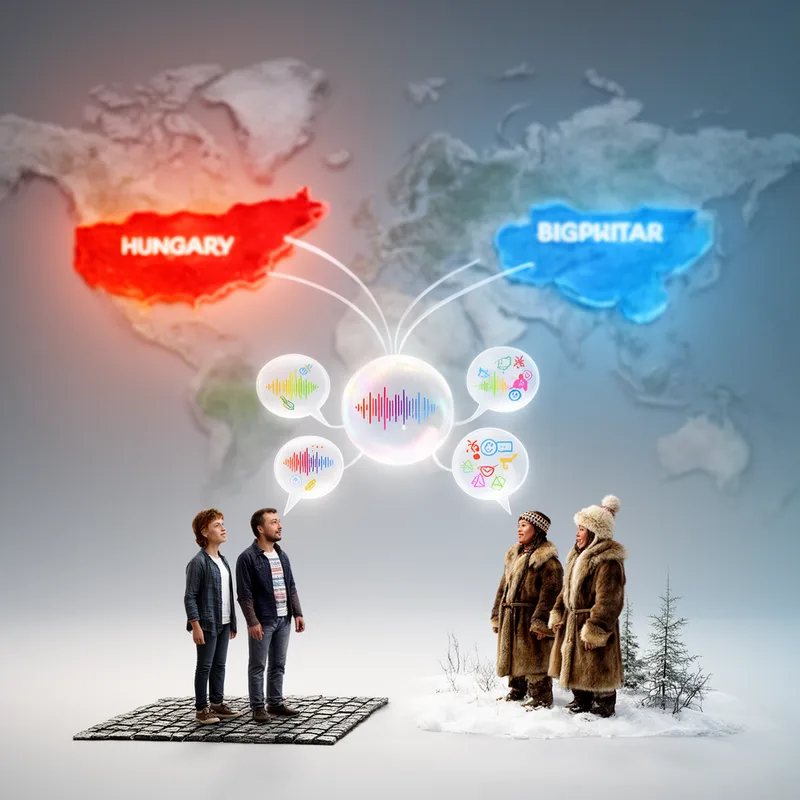
Ugric


 1
9.9
- noun
- /ˈjuːɡrɪk/
- Specialized
- Hungarian is classified as a Ugric language within the Finno-Ugric language family.
- Finno-Ugric
- Ugric languages
Examples
-
Finno-Ugric language patterns in the Urals.
-
Hungarian is a Finno-Ugric language.
Blog text (24) -
I speak Estonian, which is closely related to Finnish, and they are part of the difficult Finno-Ugric group of languages.
Blog text (27) -
Finns are culturally similar to Estonians; both languages belong to the Finno-Ugric language group and are unlike most other European languages.
Academic text (2001) -
Linguists identify several Ugric languages that are primarily spoken in northwestern Siberia.
-
The Ugric branch of the Finno-Ugric language family includes languages like Hungarian and Mansi.
Synonyms
 1
9.9
A group of related languages spoken in Hungary and western Siberia
Compounds

- Specialized
1
9.9
A group of related languages that includes Finnish, Estonian, and Hungarian
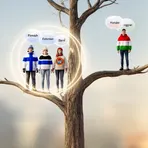
- Specialized
A group of Finno-Ugric languages including Finnish and Estonian but not Hungarian
Surface Forms
Morphology
Ugric = Ugr + ic
The suffix '-ic' is a regular adjectival formation meaning 'relating to', but the stem 'Ugr' is an ethnonym/combining form not a standalone English word and the sense is a specialized linguistic term, so an average learner cannot derive the meaning from the parts.
Etymology
Ugric comes from an old name Ugri for a group of people and was later used by language experts for the branch that includes Hungarian and some Siberian languages. So, Ugric means 'related to that group of languages'.