
Non-Ugric
- noun
- Specialized
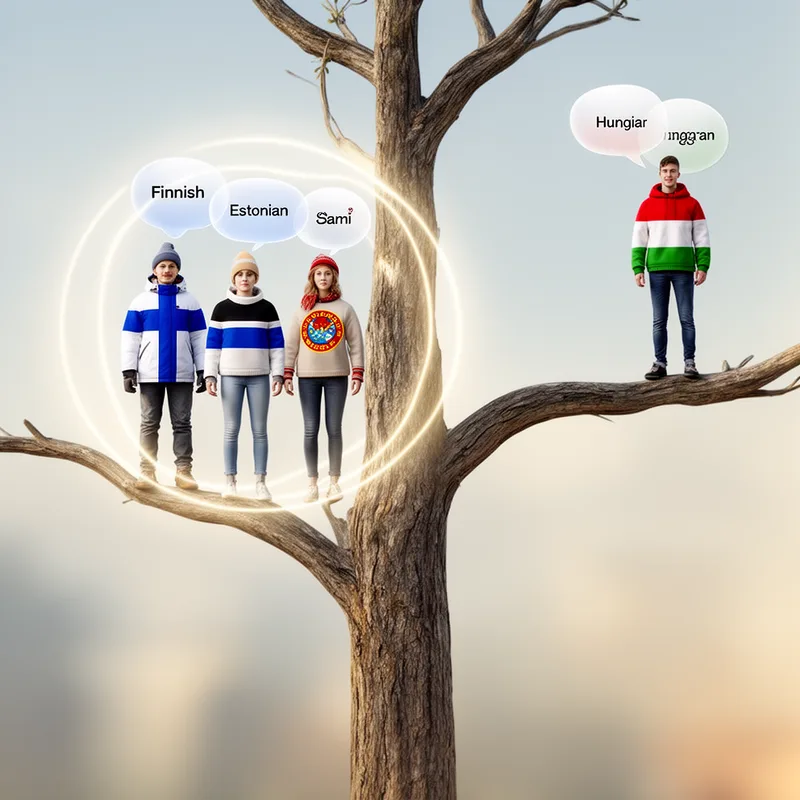
- The Non-Ugric languages include Finnish and Estonian.
Examples
-
Finnish and Estonian are classified as Non-Ugric languages within the Finno-Ugric family.
-
Unlike Hungarian, the Non-Ugric languages retain certain archaic features.
-
Linguists debate whether Sami belongs with the Non-Ugric group.
-
Many Non-Ugric speakers live in northern Europe.
-
Finnish and Estonian are classified as Non-Ugric languages within the Finno-Ugric family.
-
The Non-Ugric languages, which do not include Hungarian, are primarily spoken in the Baltic region.
-
Many Non-Ugric speakers live in northern Europe, particularly in Finland and Estonia.
Synonyms

A group of languages like Finnish and Estonian spoken near the Baltic Sea

A group of related languages that includes Finnish and Estonian but not Hungarian
Surface Forms
Morphology
Non-Ugric = Ugric (transparent) = non + Ugric
Formed with the productive negative prefix 'non-' added to the adjective 'Ugric', so the meaning is directly 'not Ugric'.
Etymology
Non-Ugric is built from Non- meaning 'not' and Ugric referring to the Ugric languages (for example, Hungarian), so it literally means 'not Ugric'. It is used for languages like Finnish and Estonian that are in the Finno-Ugric family but are not part of the Ugric (Hungarian) group.

