
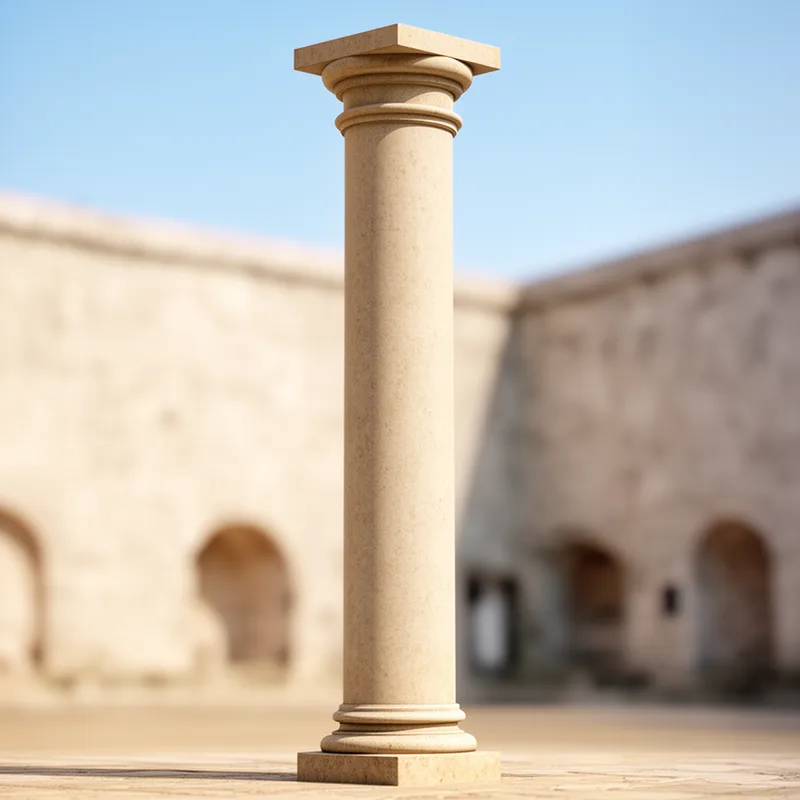
Tuscan order
- noun
- /ˈtʌskən ˈɔrdər/
- Specialized
- Unlike the Doric, the Tuscan order features a plain, unfluted shaft and an unadorned capital.
Examples
-
The columns in the new museum were built in the Tuscan order for a clean and sturdy appearance.
-
Unlike the Doric style, the Tuscan order is characterized by its plain, unfluted shafts and unadorned capitals.
-
Many Renaissance architects favored the Tuscan order for its simplicity and strength.
-
The Tuscan order is known for its simplicity.
-
Many ancient buildings feature the Tuscan order.
-
Many Renaissance architects favored the Tuscan order for its simplicity and strength.
-
The columns in the new museum were built in the Tuscan order to achieve a clean and sturdy appearance.
How Ornate
- Specialized

- Specialized
- Specialized
- Specialized
- Specialized
Surface Forms
Morphology
This is a straightforward adjective + noun composition: 'Tuscan' (from Tuscany) modifying 'order' (an architectural style), so a learner who knows both constituents can infer it refers to an architectural order associated with Tuscany/Roman practice. While the technical specifics (unfluted shaft, simpler capital) are specialized, the basic meaning is directly derivable from the parts and follows a common cross-linguistic pattern.
Etymology
Tuscan order may come from building styles in Tuscany, Italy, where builders used very plain, strong columns for simple buildings. These columns have a plain shaft and an unadorned capital, like a simple wooden post, so the name now refers to a 'simple and strong' Roman column style.

