
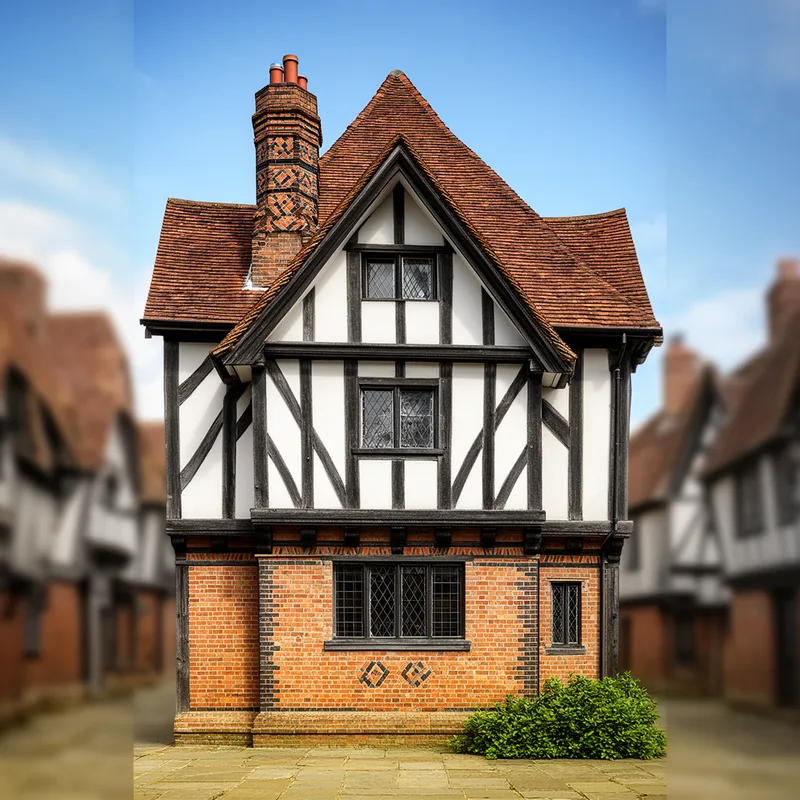
Tudor architecture
- noun
- /ˈtjuːdər ˌɑːrkɪˈtɛkʧər/
- Look at that amazing example of Tudor architecture!
Examples
-
The museum exhibits a model home built in the distinctive style of Tudor architecture.
-
Many villages in England still feature Tudor architecture with their iconic black-and-white timber-framed houses.
-
Scholars often study Tudor architecture to understand the cultural influences of the period.
-
The Tudor architecture in Stratford-upon-Avon is stunning.
-
The charming village featured many examples of Tudor architecture, including half-timbered houses and steep roofs.
-
Visitors to the historic district can admire the intricate details of Tudor architecture displayed on several buildings.
-
We learned about Tudor architecture in our art history class, particularly its distinctive brickwork and wooden frames.
Surface Forms
Morphology
The phrase combines the historical adjective 'Tudor' (relating to the Tudor period or style) with 'architecture' (building style), so its meaning — architecture from or in the Tudor style — is directly derivable from the parts. This adjective+noun compositional pattern is common across languages, making it immediately comprehensible to learners who know both constituents.
Etymology
Tudor architecture comes from the time of the Tudor royal family in England, when builders made houses with dark wooden beams showing on the outside and white plaster between them. Those visible timber frames, steep roofs, and tall brick chimneys are the memory image that makes the term mean this particular 'style' of building today.

