
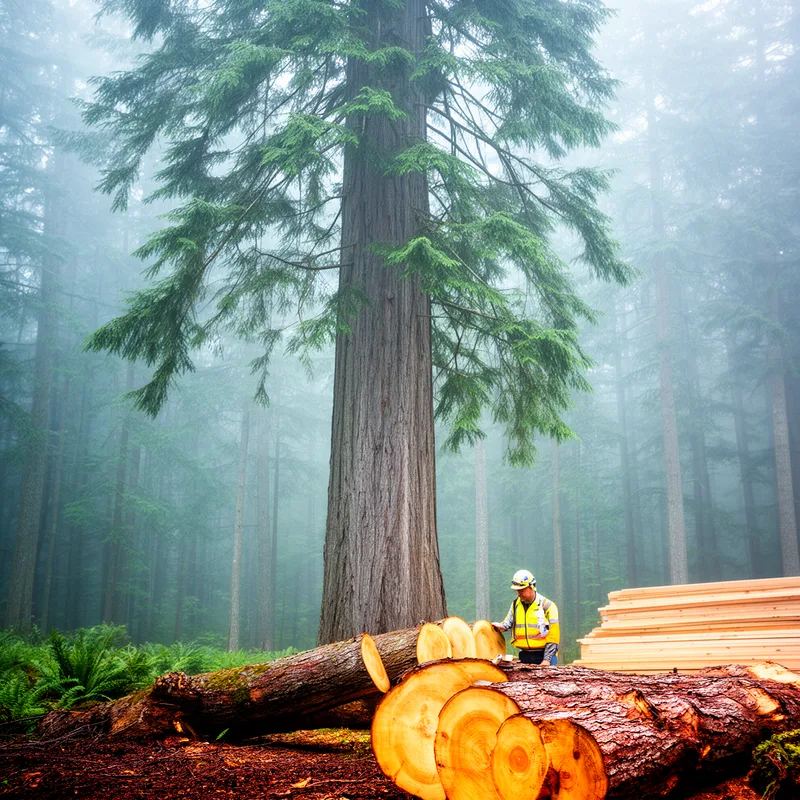
Tsuga heterophylla
- noun
- Specialized
- Tsuga heterophylla is commonly harvested for its high-quality timber in the Pacific Northwest.
Examples
-
Botanists often refer to Tsuga heterophylla as western hemlock when describing North American flora.
-
The cool, moist forests of the region are dominated by Tsuga heterophylla and Douglas fir.
-
The Tsuga heterophylla is commonly found in coastal forests.
-
Many builders prefer Tsuga heterophylla for its strong timber.
-
Tsuga heterophylla is a popular choice for construction due to its durable timber.
-
In British Columbia, Tsuga heterophylla plays a crucial role in the ecosystem as a dominant tree species.
-
Forests featuring Tsuga heterophylla provide essential habitats for various wildlife.
Synonyms

A tall evergreen tree from western North America that provides soft wood for building

A tall evergreen tree from western North America that provides wood for building

A tall evergreen tree from western North America used for its wood
Surface Forms
Morphology
Tsuga + heterophylla
This is a Latin scientific binomial rather than a compositional English phrase: 'Tsuga' and 'heterophylla' are specialized/Latin forms (with 'heterophylla' not an English word), so a B1 learner who knows ordinary English vocabulary would not derive 'western hemlock' from these constituents. Scientific names require botanical or Latin knowledge to interpret, so the meaning is opaque to general learners.
Etymology
Tsuga heterophylla may come from the Japanese word 'tsuga' for the hemlock tree and the parts hetero ('different') + phylla ('leaves'), so the name gives a simple image of a hemlock with 'different leaves' and helps explain why we call it the western hemlock.

