
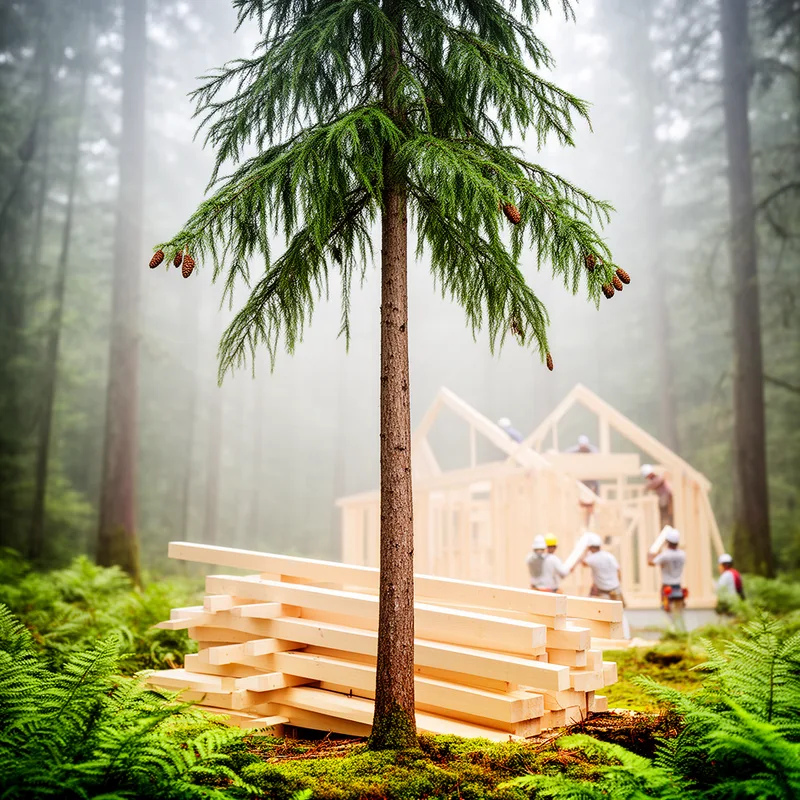
western hemlock
- noun
- /ˈwɛstərn ˈhɛmˌlɑk/
- Specialized
- Builders often use lumber from the western hemlock because of its strength and workability.
Examples
-
Conservationists are working to protect old-growth stands of western hemlock from logging.
-
Many western hemlocks grow near the coastline.
-
The western hemlock thrives in the moist forests of the Pacific Northwest.
-
The western hemlock is a common tree in the Pacific Northwest.
-
The western hemlock is often chosen for its softwood timber, which is ideal for building.
-
In the forest, the western hemlock stands out with its tall, slender trunk and lush green needles.
-
Western hemlocks thrive in the moist, shaded areas of the Pacific Northwest.
Synonyms

A tall evergreen tree from western North America called the western hemlock used for timber

A tall evergreen tree from western North America that provides wood for building

A tall evergreen tree from western North America used for its wood
Surface Forms
Morphology
The meaning is directly compositional: 'western' (from the west) modifies 'hemlock' (a type of tree), so a learner who knows both words can infer it refers to the hemlock found in western regions. This adjective+noun naming pattern for species/locations is common cross-linguistically, making the phrase immediately understandable to B1 learners.
Etymology
Western hemlock comes from a simple image: the kind of tree called a hemlock that grows in the western part of North America. Because these trees are tall, stay green all year, and are used for soft wood, the name now means 'a tall evergreen tree valued for its softwood timber'.

