
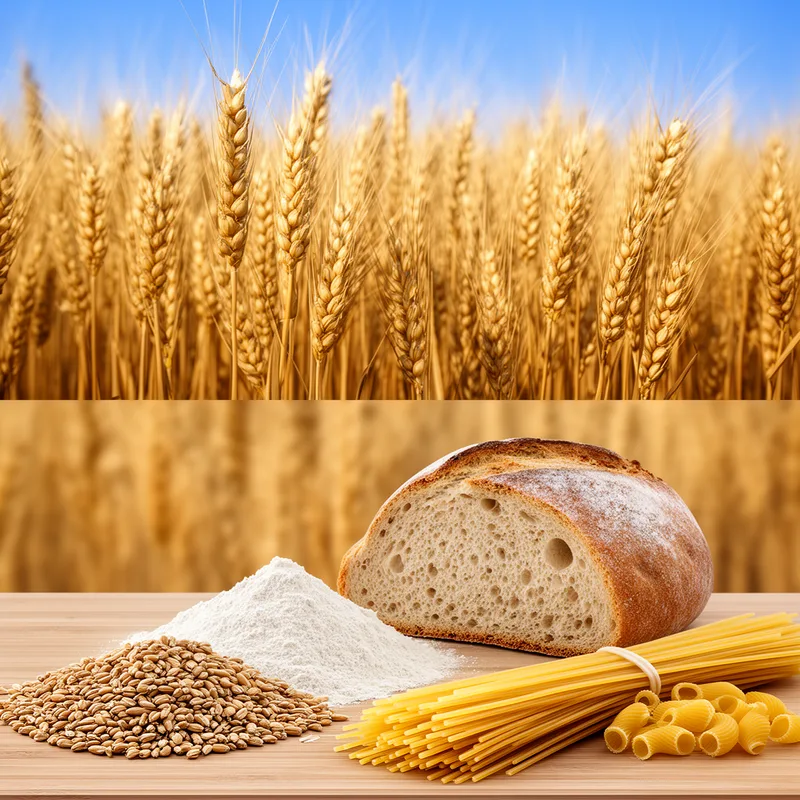
Triticum aestivum
- noun
- /ˈtrɪtɪkəm ˈɛstɪvəm/
- Specialized
- The bread made from Triticum aestivum is popular due to its excellent texture and flavor.
- wheat (Triticum aestivum)
Examples
-
Farmers often choose Triticum aestivum for its high yield and adaptability to various climates.
-
This delay associated with increased dry matter and grain production has been observed in wheat (Triticum aestivum L.).
Academic text (2014) -
Keywords: Major genes + minor genes interaction; grain filling duration; Triticum aestivum L.
Academic text (2014) -
Keywords: Triticum aestivum; net photosynthetic rate; light response curve; photochemical efficiency; yield.
Academic text (2014) -
In many countries, Triticum aestivum is a staple food crop that forms the basis of many diets.
Synonyms

A grain plant that people grow widely for flour used in bread and pasta
Surface Forms
Morphology
Triticum + aestivum
This is a Latin binomial scientific name; its meaning ('common wheat') is a specialized taxonomic label rather than a compositional English phrase. A B1 learner who knows the listed constituents would not reliably map 'Triticum' + 'aestivum' to the everyday concept of the wheat species because the epithet is Latin/technical and the overall sense is not derivable from ordinary English word meanings.
Etymology
Triticum aestivum is a scientific name from Latin that literally means 'summer wheat', with Triticum for wheat and aestivum for 'of summer'. Imagine golden fields ripening in the warm months. That image helps explain why the name refers to the common wheat grown for grain and bread.

