

Tilletia foetida
- noun
- Specialized
- Proper seed treatment can help control the spread of Tilletia foetida in wheat crops.
Examples
-
The spores of Tilletia foetida can persist in soil for several years, posing a challenge for farmers.
-
Research found that Tilletia foetida was responsible for reduced wheat yields in infected regions.
-
Farmers must be aware of Tilletia foetida and its effects on wheat crops.
-
The Tilletia foetida fungus can severely impact wheat production.
-
Proper seed treatment can help control the spread of Tilletia foetida in wheat crops.
-
Research found that Tilletia foetida was responsible for reduced wheat yields in infected regions.
-
The spores of Tilletia foetida can persist in soil for several years, posing a challenge for farmers.
Synonyms


 1
9.9
1
9.9
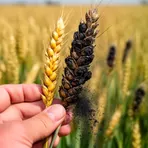
A disease of wheat that replaces grains with bad-smelling spores

A disease that affects wheat and similar grains, turning grains into dark, smelly masses

A group of fungi that causes smut disease in wheat and other grain crops

A family of plant fungi that make spores together in a small cluster at a cell tip
Surface Forms
Morphology
Tilletia + foetida
This is a Latin binomial composed of a genus name plus a species epithet, so a learner who knows 'Tilletia' as a fungus genus can infer it denotes a species of that fungus. However, the species epithet is Latin (not a productive English morpheme) and the specific disease association (bunt in wheat) is specialized domain knowledge, so the meaning is only partially recoverable from the parts.
Etymology
Tilletia foetida comes from the French scientist Mathieu Tillet and the Latin word foetida meaning 'stinking'. The fungus makes wheat grains smell very bad when it infects them, so the name points to the strong smell and the disease it causes.