
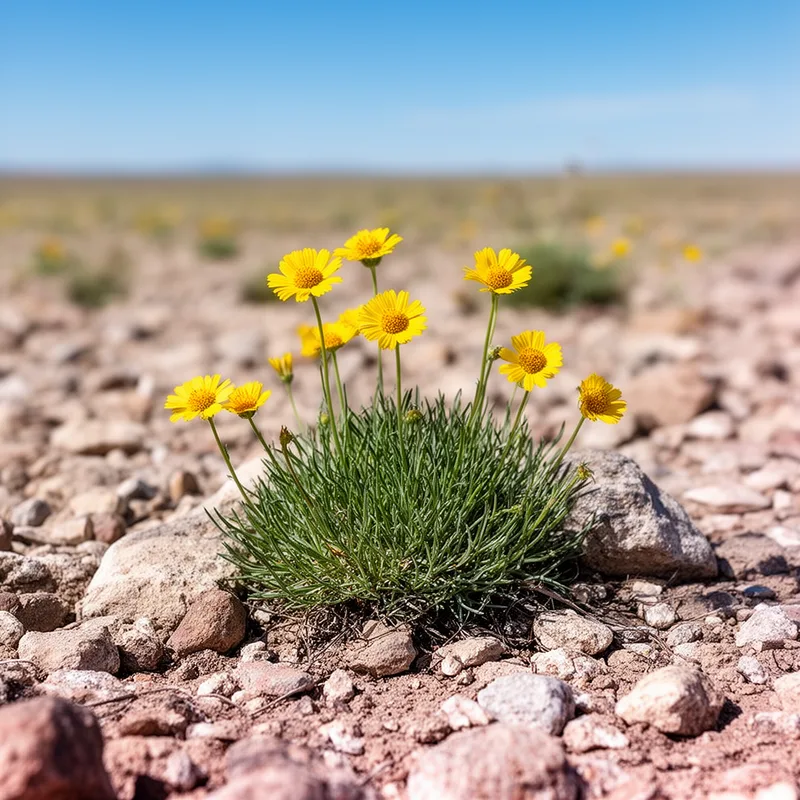
Tetraneuris acaulis
- noun
- Specialized
- On the prairie, Tetraneuris acaulis blooms in early spring, brightening the landscape with its yellow flower heads.
Examples
-
Gardeners sometimes cultivate Tetraneuris acaulis for its drought resistance and attractive blossoms.
-
Botanists studied the adaptation of Tetraneuris acaulis to dry, rocky soils in the region.
-
Look at that beautiful Tetraneuris acaulis over there!
-
The Tetraneuris acaulis blooms in the spring.
-
In gardens across the region, Tetraneuris acaulis is valued for its vibrant yellow flowers and resilience in dry conditions.
-
In early spring, Tetraneuris acaulis can be seen dotting the prairie with its bright yellow blooms.
-
Many hikers admire Tetraneuris acaulis for its ability to thrive in rocky soil while producing beautiful flowers.
Synonyms
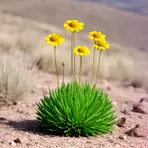
A perennial plant with a base of green leaves and short leafless stems each with one yellow flower
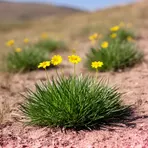
A low plant that lives many years with a clump of leaves and single yellow flowers on short stalks
Surface Forms
Morphology
Tetraneuris + acaulis
This is a scientific Latin binomial used as a taxonomic label rather than a compositional English phrase; knowing 'Tetraneuris' (a plant genus) and an undefined element 'acaulis' does not allow a B1 learner to infer the full meaning without botanical or Latin knowledge. Species names function as arbitrary labels across languages, so the overall meaning is not derivable from the surface constituents for typical learners.
Etymology
Tetraneuris acaulis may come from old Greek and Latin words. The parts tetra and neuris mean 'four' and 'vein', and acaulis means 'without a stem', so the name paints a picture of a small, 'without a stem' plant with short stalks and yellow flowers, which helps you remember what the plant looks like.

