
Tantrism


 1
9.9
- noun
- /ˈtæntrɪzəm/
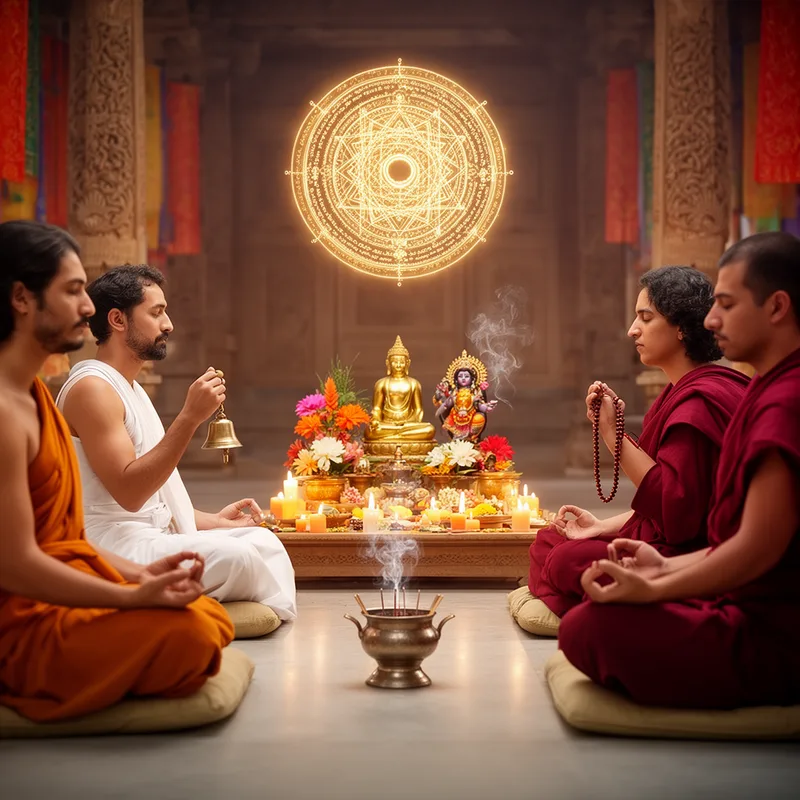
- Tantrism emphasizes the importance of rituals and meditation as pathways to deeper understanding in both Hinduism and Buddhism.
Examples
-
You know, magic, tantrism, genetics, the cloning worlds, looking at semantics, looking at intrinsic nature, looking at impermanence, looking at how we name and qualify, and where does that come from.
-
Eastern religions, such as Hinduism and Buddhism, sometimes incorporate sex into religious practice, such as in Tantrism, but to do so, sex is elevated to a divine plane; even in these religions, however, celibacy is practiced by the most holy members (Ellwood & Alles, 1998).
Academic text (2002) -
In Tantrism, practitioners often use specific mantras during their meditation to connect with the divine.
-
Many people are drawn to Tantrism for its unique blend of ritual and meditation that aims to achieve spiritual enlightenment.
Synonyms
 3
9.9
A set of religious practices and ideas using special rituals like chants or hand signs to reach spiritual unity
Surface Forms
Morphology
Etymology
Tantrism comes from the Sanskrit word tantra, which means 'weave' or 'loom'. So, Tantrism is a tradition that 'weaves' rituals, mantras, and meditation together into one system for spiritual growth.